Tag: Bruen

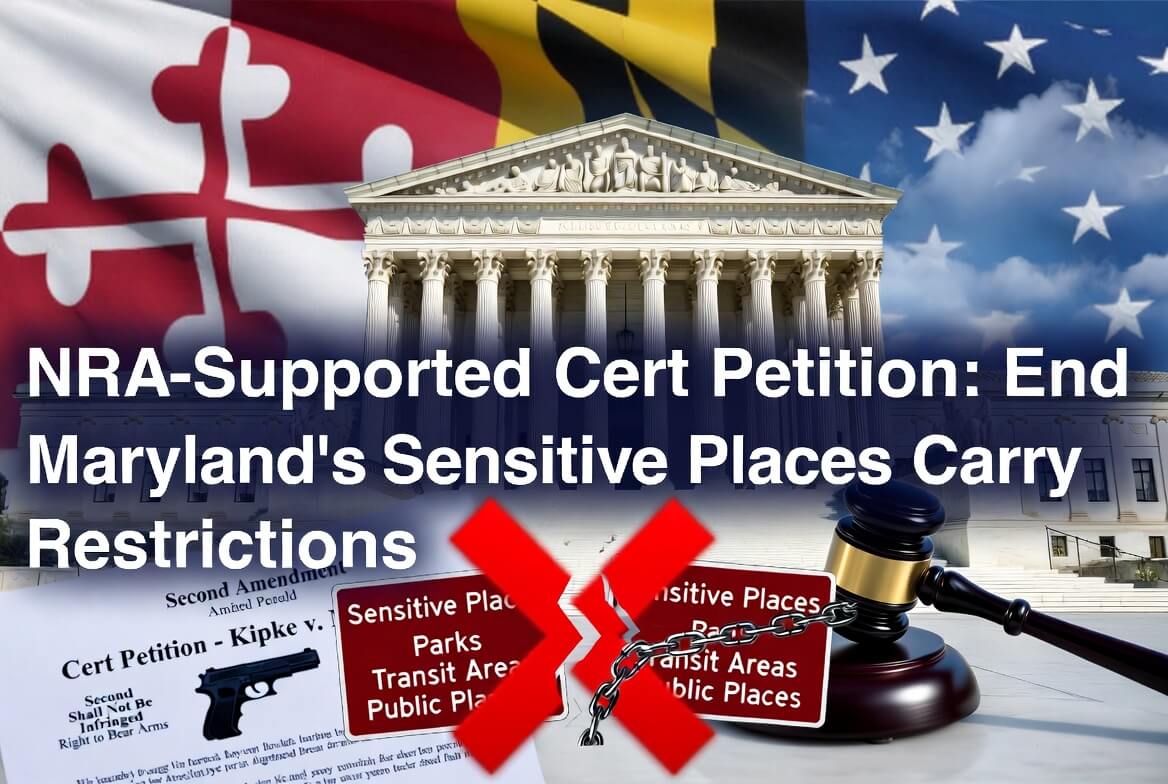
  • NRA-Supported Cert Petition Filed Challenging Maryland’s Sensitive Places Carry Restrictions

    NRA-Supported Cert Petition Filed Challenging Maryland’s Sensitive Places Carry Restrictions

    In a significant move that could reshape concealed carry laws across the nation, the National Rifle Association has joined forces with dedicated Second Amendment advocates to petition the U.S. Supreme Court. They’re asking the justices to review a troubling Fourth Circuit ruling that green-lights Maryland’s expansive “sensitive places” restrictions—rules that effectively turn everyday public spaces into no-go zones for law-abiding gun owners.
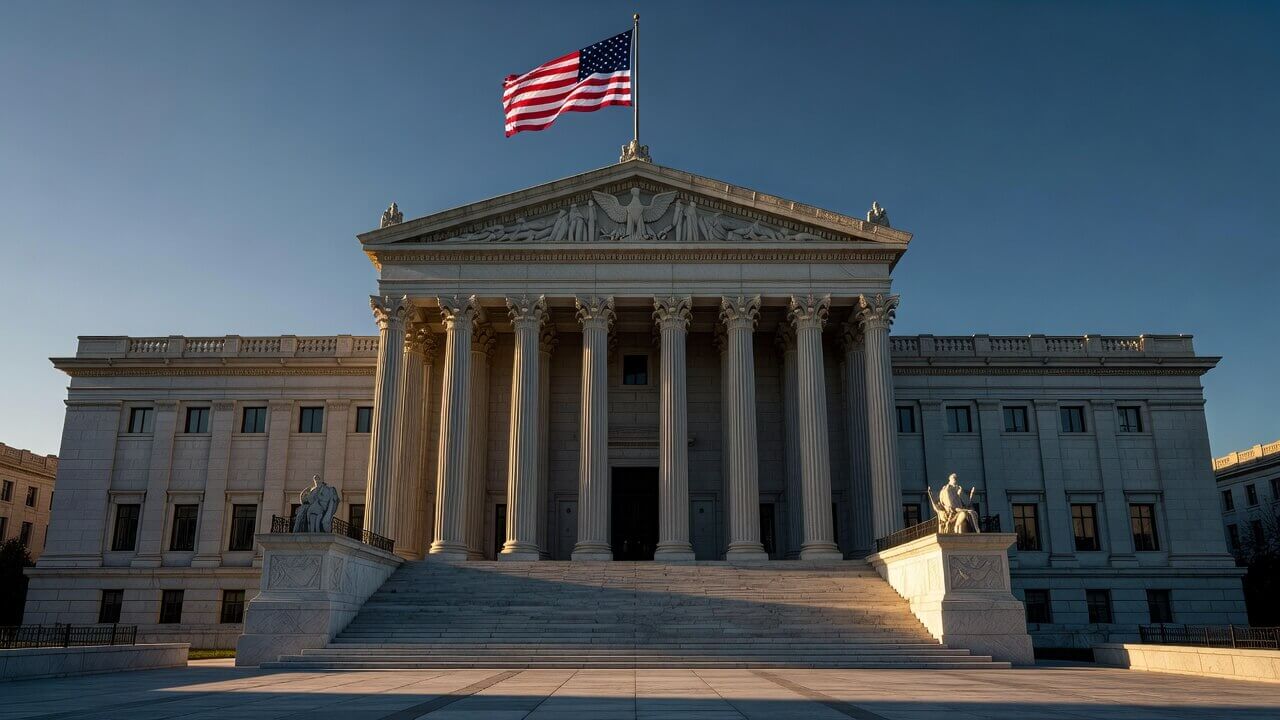
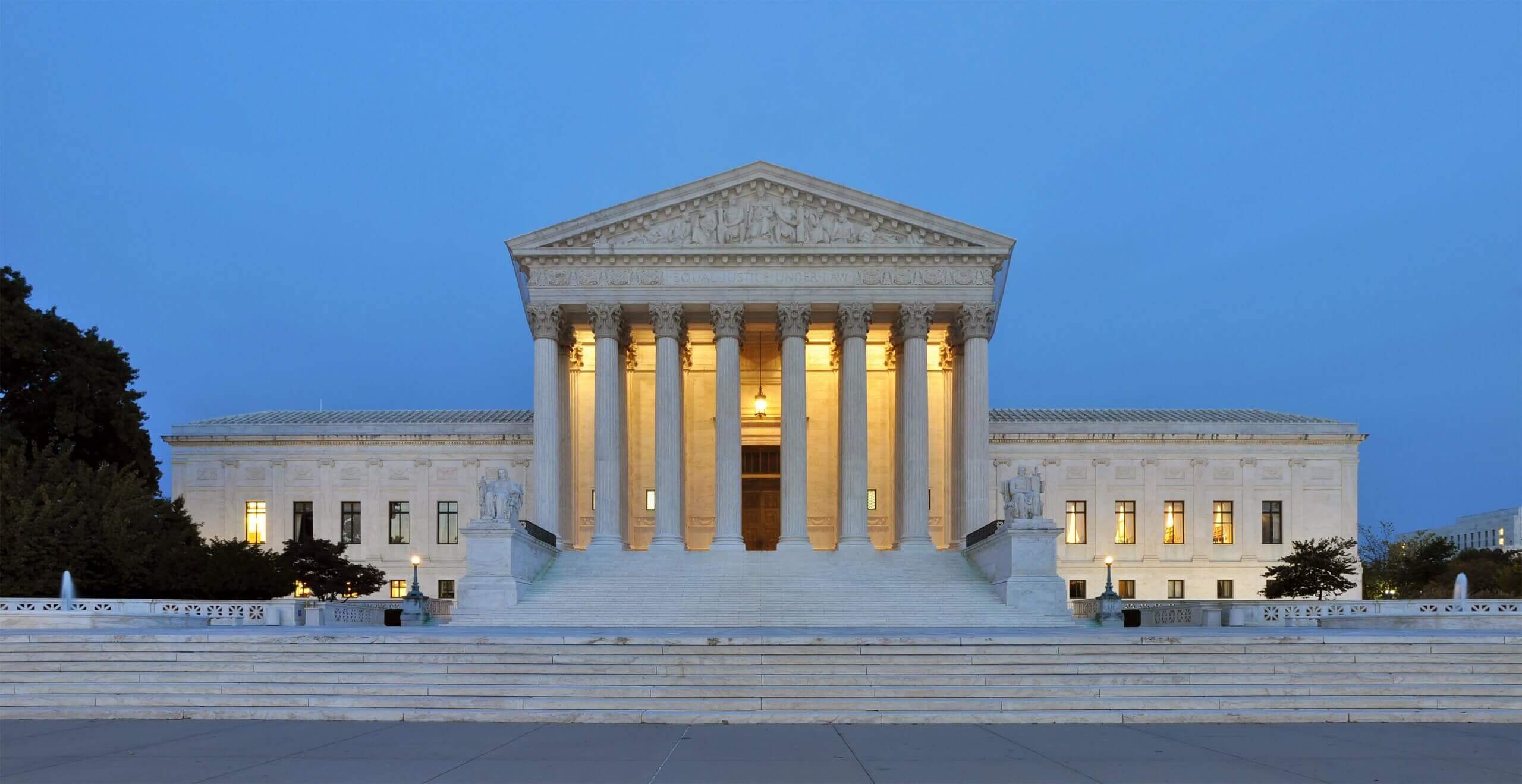
    Majestic view of the U.S. Supreme Court building under a clear blue sky, symbolizing the fight for constitutional rights

    This challenge strikes at the heart of the post-Bruen landscape. Maryland’s law slaps broad prohibitions on carrying in everything from parks and museums to government buildings and even private property without explicit permission. The state offers little in the way of historical evidence from the Founding era to justify these sweeping bans. Under the Supreme Court’s clear Bruen test, that absence should doom the restrictions—yet the Fourth Circuit upheld them anyway, leaving millions of Marylanders with diminished rights to self-defense outside the home.

    The petition highlights how these “sensitive places” designations aren’t rooted in tradition but in modern policy preferences. History shows that the right to bear arms extended to public spaces, with narrow exceptions only for truly sensitive locations like courthouses or polling places during specific eras. Maryland’s approach flips this on its head, treating virtually every public area as off-limits and forcing carriers to navigate a legal minefield just to exercise a fundamental liberty.

    Supporters of the petition argue this case represents a critical test for the Bruen framework. If the Supreme Court declines review or fails to correct the lower court’s misapplication, other states could follow suit with even more aggressive restrictions. Law-abiding citizens deserve consistent protection for their right to carry for self-defense, not patchwork rules that disarm them in the very places where threats can arise.
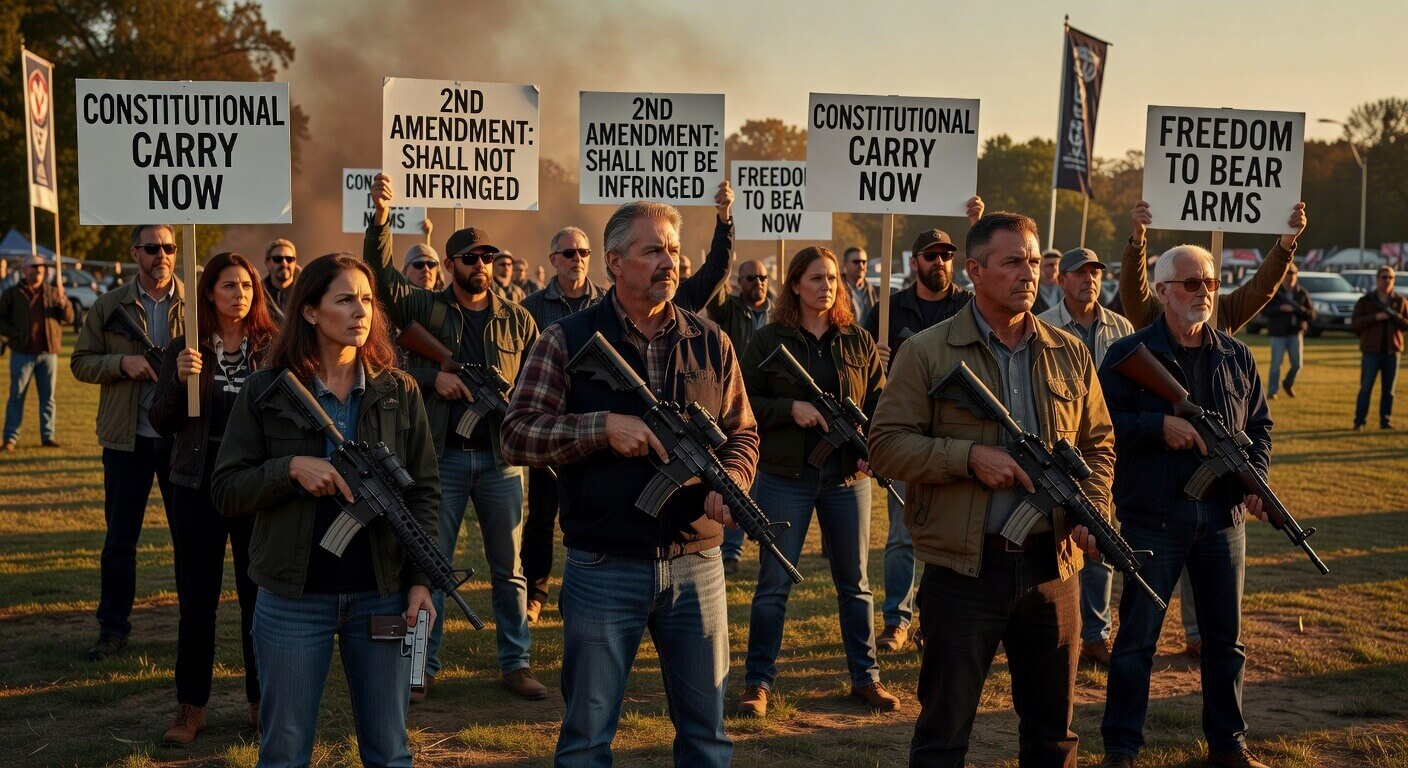
    Group of diverse Second Amendment supporters gathered at a peaceful rally holding signs advocating for constitutional carry rights

    As the high court weighs whether to grant certiorari, the stakes couldn’t be higher for gun owners nationwide. This filing underscores the ongoing battle to ensure that recent Supreme Court victories translate into real-world freedom, not endless litigation against overreaching state laws. The NRA and its allies are standing firm—now it’s time for the justices to reaffirm that the Second Amendment means what it says.

    Join the Fight - Second Amendment Foundation

    References

  • SAF Secures Victory Striking Down Key Parts of New York Sensitive Places Carry Ban

    SAF Secures Victory Striking Down Key Parts of New York Sensitive Places Carry Ban

    In a landmark decision that strengthens the rights of law-abiding gun owners across New York, the Second Circuit Court of Appeals has delivered a major win for constitutional carry. The ruling, handed down on May 18, 2026, strikes down critical portions of the state’s overly broad “sensitive places” restrictions that had effectively turned much of the private property open to the public into no-go zones for permitted carriers.

    This victory, secured by the Second Amendment Foundation along with dedicated partners, directly challenges the post-Bruen landscape where anti-gun lawmakers rushed to impose sweeping limitations on where licensed individuals could exercise their fundamental right to bear arms. By invalidating the prohibition on carry at private businesses and properties accessible to the public, the court has restored common-sense protections that align with the Supreme Court’s clear directive in Bruen. Gun owners no longer face the absurd prospect of becoming instant criminals simply for stepping onto a shopping center parking lot or a privately owned park with their lawfully carried firearm.

    Second Circuit judges delivering a pro-Second Amendment ruling in a historic courtroom setting

    While the decision upholds restrictions in public parks, it sends a powerful message that governments cannot arbitrarily designate vast swaths of everyday life as off-limits without meeting strict constitutional scrutiny. This balanced outcome underscores the ongoing fight to protect carry rights without compromising public safety, and it sets a precedent that will likely influence similar challenges nationwide.

    For New York permit holders who have navigated the state’s complex licensing system, this ruling represents real progress. It affirms that the right to self-defense does not vanish the moment you leave your home or enter spaces where the public is routinely invited. As legal experts review the full opinion, Second Amendment advocates are already preparing for the next steps to expand these freedoms even further. The momentum from this case reminds us that persistent, principled legal action continues to chip away at unconstitutional barriers—one victory at a time.

    Join the Fight - Second Amendment Foundation

    References

  • Eighth Circuit Upholds Minnesota Permit Reciprocity Law in McCoy v. Jacobson

    Eighth Circuit Upholds Minnesota Permit Reciprocity Law in McCoy v. Jacobson

    The recent decision from the Eighth Circuit in McCoy v. Jacobson has gun owners across the Midwest taking a hard look at what real reciprocity means for law-abiding citizens who want to exercise their Second Amendment rights on the road. While the court upheld Minnesota’s narrow approach to recognizing out-of-state permits, the ruling underscores a bigger problem: states continuing to erect barriers that treat responsible carriers like potential threats instead of fellow Americans protected by the Constitution.

    Eighth Circuit Rejects Gun-Rights Challenge to Minnesota Law
    Minnesota’s gun-permit reciprocity law is constitutional despite excluding certain states, the Eighth Circuit ruled.
    Photographer: Luke Sharrett/Bloomberg Law

    Minnesota’s law only honors permits from states with “comparable” requirements, effectively shutting out many shall-issue states that already meet basic standards. This creates a patchwork where a permit valid in Iowa or Wisconsin might suddenly become worthless just across the border. For travelers, hunters, and everyday carriers, that uncertainty turns routine trips into legal minefields.

    Bruen Set the Stage, But States Keep Testing Limits

    The Bruen decision was supposed to shift the conversation toward history and tradition, rejecting subjective “may-issue” gatekeeping. Yet Minnesota’s restrictions survived scrutiny by claiming their reciprocity rules fit within that framework. Pro-2A advocates see this as another example of courts allowing states to nibble around the edges of constitutional carry rights rather than embracing the full protection the Supreme Court outlined.
    Law-abiding gun owners aren’t asking for special treatment. They’re asking for the same respect given to driver’s licenses, which states honor nationwide without demanding identical testing procedures. Concealed carry permits deserve similar treatment because the right to bear arms doesn’t stop at state lines.

    What This Means for Interstate Travel

    Imagine planning a family road trip through the upper Midwest only to discover your home-state permit offers zero protection in Minnesota. That friction discourages lawful carry and hands an advantage to criminals who ignore permitting laws anyway. The decision highlights why national reciprocity legislation remains essential—so citizens don’t have to study 50 different rulebooks before crossing borders.
    Gun owners have every reason to stay engaged. Contact your representatives, support organizations pushing for true reciprocity, and keep pressing the point that the Second Amendment isn’t a state-by-state privilege. The fight for consistent recognition of carry rights continues, and rulings like this only sharpen the resolve.

    Join the Fight - Second Amendment Foundation

    References

  • Second Circuit Upholds New York Ban on Firearms in Public Parks

    Second Circuit Upholds New York Ban on Firearms in Public Parks

    The recent ruling from the Second Circuit delivers a mixed bag for New York gun owners, and the pro-Second Amendment community isn’t celebrating the parts that restrict our rights. While the court correctly struck down the state’s overreaching private property consent law, its decision to uphold the ban on firearms in urban public parks represents yet another attempt to chip away at the fundamental right to bear arms in public spaces.

    Vibrant urban public park in New York City showing open lawns, walking paths, and families enjoying outdoor activities

    Under the Bruen framework, courts must look to the nation’s historical traditions for guidance on firearm regulations. The Second Circuit claimed that bans on guns in parks align with those traditions, but this stretches historical analogies far beyond reason. Public parks as we know them today didn’t exist in the founding era, and early laws targeted specific dangers like firing weapons near crowded areas—not blanket prohibitions on peaceful carry by law-abiding citizens.

    A Partial Victory on Private Property

    The silver lining comes from the court’s rejection of New York’s requirement that permit holders obtain explicit consent before carrying on private property. This provision was a blatant attempt to turn the default from “shall not be infringed” into “ask permission first.” By striking it down, the Second Circuit acknowledged that such rules flip the Constitution on its head and create impossible compliance burdens for everyday carriers.

    Grand facade of a federal appellate courthouse with columns and American flag flying

    Why Parks Should Remain Open for Carry

    Parks are quintessential public forums where millions of Americans exercise, relax, and gather with family. Treating them as “sensitive places” exempt from constitutional protection ignores the reality that law-abiding gun owners pose no greater threat than anyone else. Historical evidence shows that restrictions on carrying in parks are largely modern inventions, not rooted in the founding era’s understanding of the right to keep and bear arms.

    This decision highlights the ongoing battle in the courts. While one flawed interpretation of history prevailed on parks, the rejection of the consent requirement proves that aggressive state overreach can still be pushed back. Gun owners across New York and beyond should stay engaged, support strong legal challenges, and continue advocating for the full scope of our Second Amendment rights in every public space.

    Join the Fight - Second Amendment Foundation

    References

  • NRA, SAF, and Allies File Federal Lawsuit Challenging Constitutionality of 1934 National Firearms Act

    NRA, SAF, and Allies File Federal Lawsuit Challenging Constitutionality of 1934 National Firearms Act

    In a groundbreaking legal assault on one of the oldest federal gun control measures in American history, major Second Amendment organizations have joined forces to challenge the core provisions of the 1934 National Firearms Act. This lawsuit arrives at a pivotal moment, riding the momentum of the Supreme Court’s Bruen decision and demanding that courts recognize how registration schemes, taxes, and outright restrictions on common firearms accessories simply cannot survive constitutional scrutiny today.

    The plaintiffs argue that the NFA’s heavy-handed requirements for short-barreled rifles, short-barreled shotguns, and suppressors amount to an unconstitutional burden on the right to keep and bear arms. Rather than treating these items as dangerous oddities from the gangster era, the filing points out that they are ordinary, commonly used tools for self-defense, sport shooting, and hearing protection. Post-Bruen, any law regulating arms must align with the nation’s historical tradition—and the NFA’s 90-year-old framework fails that test spectacularly.

    Detailed image of federal court documents and gavel representing the new NFA lawsuit filing

    The coalition behind this effort includes the National Rifle Association, the American Suppressor Association, the Second Amendment Foundation, and the Firearms Policy Coalition, along with individual plaintiffs who have faced the full weight of NFA compliance. Their complaint seeks both declaratory relief to declare key sections unconstitutional and injunctive relief to halt enforcement of the registration, taxation, and transfer restrictions. This isn’t a narrow technical challenge—it’s a direct strike at the heart of a law that has long treated peaceable citizens like potential criminals for wanting to own a suppressor or a properly configured rifle.

    Critics of the NFA have long noted how its $200 tax stamp—unchanged since the Great Depression—functions more as a barrier to entry than any meaningful public safety measure. Suppressors, for example, reduce noise pollution and protect hearing without turning firearms into silent assassins as Hollywood would have us believe. Short-barreled firearms offer maneuverability advantages in home defense scenarios, yet the NFA forces owners through a months-long bureaucratic maze complete with fingerprints, photos, and local law enforcement notification. The Bruen framework makes clear that such hurdles lack historical analogues from the Founding era, when Americans freely possessed and modified their arms.

    This lawsuit represents more than legal maneuvering. It signals a renewed commitment to rolling back New Deal-era restrictions that have lingered far too long in the shadows of the Second Amendment. If successful, it could open the door for millions of Americans to exercise their rights without government permission slips or punitive taxes. Supporters across the pro-2A community are watching closely, recognizing that victories like this build on the momentum from recent Supreme Court wins and state-level reforms.

    As the case moves forward in federal court, it serves as a powerful reminder that constitutional rights aren’t privileges granted by bureaucrats—they are inherent protections that demand vigilant defense. The fight against the NFA’s outdated framework is just beginning, and this coalition is bringing serious firepower to the battle.

    Join the Fight - Second Amendment Foundation

    References

  • Federal Circuit Split Highlights Second Amendment Fight Over Gun Waiting Periods

    Federal Circuit Split Highlights Second Amendment Fight Over Gun Waiting Periods

    In the ever-evolving battlefield of Second Amendment jurisprudence, a fresh circuit split has ignited hope among gun rights advocates. The Tenth Circuit Court of Appeals just delivered a resounding victory by striking down New Mexico’s seven-day waiting period on firearms, ruling it has no historical analogue under the Supreme Court’s landmark New York State Rifle & Pistol Association v. Bruen framework. But not all circuits are on board— the First Circuit upheld Maine’s 72-hour waiting period, claiming it doesn’t burden the core right to keep and bear arms. This disagreement screams for Supreme Court intervention, and it’s a prime opportunity to expand gun owners’ freedoms nationwide.

    Graphic illustration of a split U.S. Court of Appeals circuit map highlighting the Tenth and First Circuits with scales of justice tipping toward the Second Amendment.
    Graphic illustration of a split U.S. Court of Appeals circuit map highlighting the Tenth and First Circuits with scales of justice tipping toward the Second Amendment. (via news.bloomberglaw.com)

    The Tenth Circuit Delivers a Pro-2A Win: Ortega v. Grisham

    In Ortega v. Grisham, the Tenth Circuit didn’t mince words. New Mexico’s seven-day waiting period for all firearm purchases—regardless of background checks or prior ownership—was deemed unconstitutional. Judge David Stras, writing for the panel, applied Bruen’s history-and-tradition test with precision: “We conclude that the seven-day waiting period regulates conduct protected by the Second Amendment and that the State has not met its burden of showing that the regulation is consistent with this Nation’s historical tradition of firearm regulation.”

    Why does this matter? Waiting periods force law-abiding citizens to wait days for a tool of self-defense they’ve already legally purchased. Imagine a woman escaping domestic abuse, needing a firearm now—that delay could be deadly. The court recognized this, rejecting the state’s flimsy “cooling off” rationale as ahistorical. No Founding-era evidence supports delaying a citizen’s right to acquire arms post-purchase. Score one for the Constitution!

    The First Circuit’s Misstep: Beckwith v. Frey

    Contrast that with the First Circuit’s April 3, 2026, decision in Beckwith v. Frey, upholding Maine’s 72-hour wait. The court twisted Bruen by claiming the regulation doesn’t “burden the core Second Amendment right” because it only applies after passing a background check. They leaned on a vague “historical tradition of delay” from licensing schemes, but critics—and soon, hopefully, SCOTUS—see through this.

    This ruling ignores Bruen’s mandate: Modern gun laws must mirror historical regulations of similar burden on similarly situated arms. Short-term delays for public carry? Sure, maybe colonial regulations existed. But forcing a delay on private purchases for self-defense at home? That’s a Second Amendment non-starter. Maine’s law treats every buyer like a potential criminal, infringing on the presumptive right to bear arms.

    Why Waiting Periods Fail the Bruen Test

    Post-Bruen (2022) and United States v. Rahimi (2024), courts must ask: Is there a historical tradition of this regulation? Waiting periods? Zilch. Founders didn’t make patriots cool their heels before arming against tyrants or threats. Anti-gun groups peddle suicide prevention myths, but data shows waiting periods don’t reduce overall violence and disproportionately harm the law-abiding.

    • No Historical Analogues: States can’t cherry-pick 20th-century “cooling off” laws invented amid 1930s gangster panics.
    • Burden on Self-Defense: Delays undermine the right to immediate protection, especially for repeat buyers or those in peril.
    • Universal Background Checks Suffice: NICS already prevents prohibited persons; extra waits are feel-good theater.

    This split mirrors post-Bruen chaos on assault weapons bans, standard-capacity magazines, and age restrictions. The Tenth Circuit got it right—now SCOTUS must step in.

    What’s Next? Eyes on the Supreme Court

    With cert petitions likely incoming, gun owners should rally. Organizations like the NRA, FPC, and GOA are leading the charge. Contact your reps, support 2A litigation funds, and stay armed and informed. This circuit split isn’t just legalese—it’s the front line in preserving our God-given right against creeping confiscation.

    The Second Amendment isn’t a suggestion; it’s the ultimate check on government overreach. The Tenth Circuit advanced liberty—let’s hope SCOTUS finishes the job and buries waiting periods for good. Stay vigilant, patriots!

    Follow GunStuff.tv for the latest 2A updates. What do you think—will SCOTUS take this up? Sound off in the comments!

    Join the Fight - Second Amendment Foundation

    References

  • Supreme Court Grants Review in Wolford v. Lopez: Hawaii’s Ban on Concealed Carry in Private Businesses Faces Second Amendment Scrutiny

    Supreme Court Grants Review in Wolford v. Lopez: Hawaii’s Ban on Concealed Carry in Private Businesses Faces Second Amendment Scrutiny

    Big news for Second Amendment defenders: the U.S. Supreme Court just granted certiorari in Wolford v. Lopez (No. 24-1046), putting Hawaii’s draconian ban on concealed carry in private businesses squarely in the crosshairs. This is the next frontier in our post-Bruen fight for carry rights, and it’s a direct shot at nanny-state restrictions that treat law-abiding gun owners like criminals.

    The Supreme Court building with American flags waving, symbolizing justice for Second Amendment rights.

    What Happened in Hawaii?

    Hawaii’s law presumptively bans licensed concealed handgun carriers from carrying on private property open to the public—like stores, restaurants, and gas stations—unless they get the owner’s express permission first. No signage required, no posted “no guns” sign; you just need affirmative okay from the property owner every time. Fail to get it? You’re breaking the law.

    James Wolford and Aaron Wolford, both licensed concealed carriers, were arrested for carrying in such places without that permission. They sued, arguing this violates the Second Amendment under New York State Rifle & Pistol Association v. Bruen (2022), which demands gun laws be rooted in historical tradition, not modern “sensitive places” whims.

    The Ninth Circuit’s Blunder

    The Ninth Circuit upheld Hawaii’s ban, claiming it’s consistent with “historical regulations prohibiting carrying in places where the people gathered in large numbers.” But here’s the kicker: this clashes with rulings from the Third, Fifth, and Seventh Circuits, which struck down similar “private property” bans post-Bruen. The split creates perfect grounds for SCOTUS intervention, and they’ve taken it up.

    Critics of Hawaii’s rule point out there’s zero historical analogue for forcing armed citizens to beg permission before entering a public-facing business. Our Founding Fathers carried freely into taverns, shops, and inns without doormen checking for flintlock approvals. Hawaii’s approach flips property rights on its head—punishing carriers instead of letting owners decide via signs.

    Why This Matters for Your Rights

    If SCOTUS rules for the Wolfords, it could dismantle presumptive bans nationwide. Imagine shopping at Walmart, grabbing coffee at Starbucks, or filling up at the pump without second-guessing your God-given right to self-defense. No more “permission slips” for peaceable armed citizens.

    • Post-Bruen Clarity: Reinforces that “sensitive places” must be historically precise—not vague “private property” catch-alls.
    • Circuit Split Resolved: Ninth Circuit’s outlier status exposed and corrected.
    • Expansion of Carry Rights: Private businesses open to the public become fair game, aligning with public carry freedoms.

    Hawaii’s paradise-for-criminals vibe—highest concealed carry permit denial rate in the nation—won’t survive Bruen‘s glare. This case screams for reversal.

    Stay Locked and Loaded

    Keep your eyes on this one, patriots. SCOTUS could hear arguments next term, delivering another win for the right to keep and bear arms. In the meantime, support groups like the Firearms Policy Coalition and Second Amendment Foundation fighting these battles. Train hard, carry smart, and defend the Constitution—because freedom doesn’t defend itself.

    What do you think—will SCOTUS expand carry rights into private spaces? Drop your take in the comments below!

    Join the Fight - Second Amendment Foundation

    References

  • 11th Circuit Rejects Second Amendment Challenge to Federal Machine Gun Ban

    11th Circuit Rejects Second Amendment Challenge to Federal Machine Gun Ban

    Bad news out of the 11th Circuit Court of Appeals: they’ve just slammed the door on a Second Amendment challenge to the federal machine gun ban, ruling that full-auto firearms and conversion devices like auto-sears aren’t protected by our sacred right to keep and bear arms. In a decision that’s sure to rile up every freedom-loving gun owner, the court upheld the conviction of a Florida man for possessing an auto-sear—a tiny piece of metal that turns a standard AR-15 into a machine gun. This comes post-New York State Rifle & Pistol Association v. Bruen, the landmark 2022 Supreme Court case that was supposed to make gun grabbers sweat. But apparently, not in Atlanta.

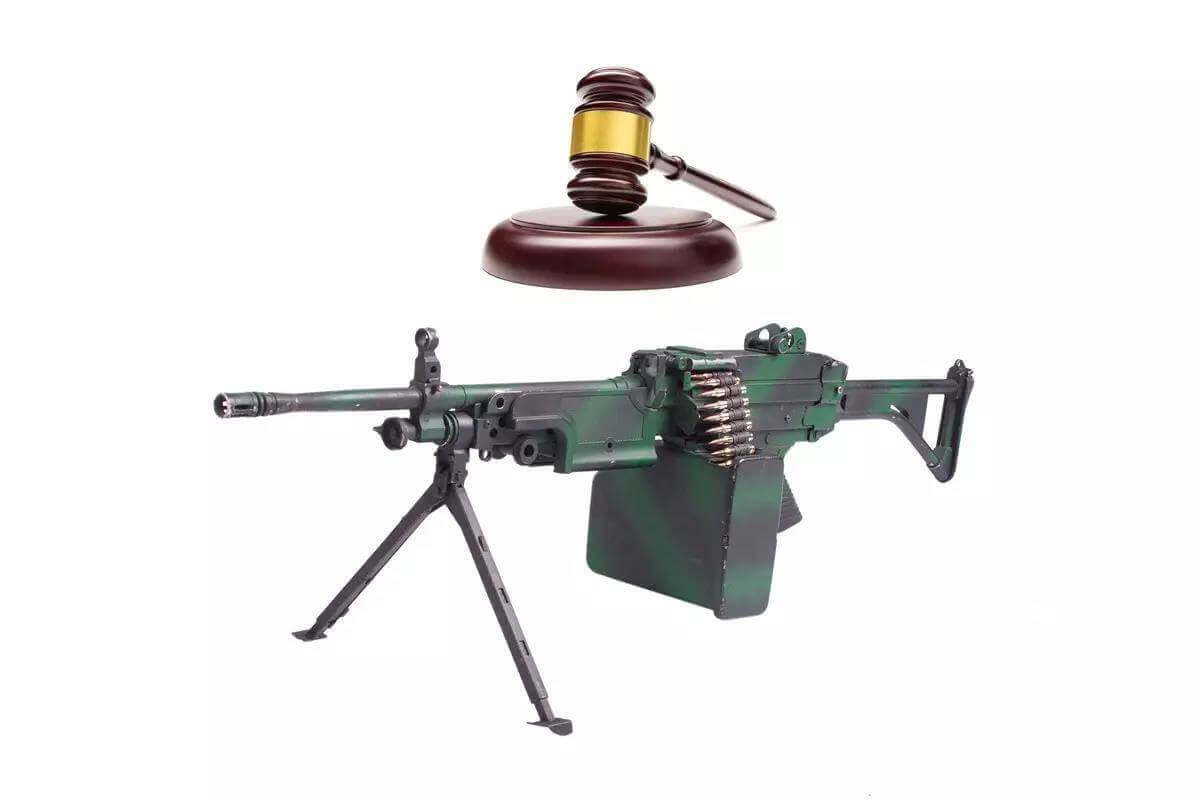
    Gavel striking down on a machine gun silhouette with Second Amendment text overlay

    The Case: One Man’s Fight Against the NFA

    Let’s break it down. The defendant, a Florida resident we’ll call “John Doe” for this post (real name in the ruling: United States v. Roe), got pinched by the ATF for having an auto-sear. These devices, often called “drops” or “lightning links,” are cheap, easy to make, and extremely effective at bumping a semi-automatic rifle into full-auto territory. Under the National Firearms Act (NFA) of 1934 and the Firearm Owners’ Protection Act (FOPA) of 1986, new machine guns for civilians are verboten. You can own pre-1986 transfers if you’re rich enough (we’re talking $20K-$50K a pop), but good luck finding one.

    Doe argued that the outright ban violates the Second Amendment as interpreted by Bruen. The Supreme Court in Bruen ditched the old “interest-balancing” tests that let judges play God with our rights. Instead, regulations must be “consistent with this Nation’s historical tradition of firearm regulation.” Doe said machine guns are “arms” and the ban doesn’t pass muster historically.

    The 11th Circuit? Not buying it. In a 2-1 decision penned by Judge Jill Pryor (Clinton appointee), they said machine guns aren’t “in common use today” for self-defense—a key phrase from District of Columbia v. Heller (2008). Since MGs aren’t your everyday carry at the range or home, they’re outside 2A protection altogether. No need to dig into history. Case closed. Conviction affirmed.

    Post-Bruen Chaos: Courts Twist the Test

    Bruen was a game-changer. Justice Thomas laid it out: Text, history, and tradition. If it’s an “arm” in “common use,” it’s protected. Regs must analogize to 1791 or 1868 traditions. But lower courts are mangling it. The 11th Circuit here skips straight to “common use” as a gatekeeper, ignoring whether machine guns are “arms” at all.

    Pro-2A scholars like the Firearms Policy Coalition and lawyers at the Second Amendment Foundation are fuming. Judge Adalberto Jordan’s dissent nailed it: The majority’s approach is “textually and historically unsound.” Machine guns are “bearable arms.” History shows rapid-fire weapons like the Gatling gun (Civil War era) and even repeating rifles were known. The 1934 NFA was a knee-jerk reaction to gangsters, not some deep tradition.

    Supreme Court justices with Bruen decision book and American flag in background

    And here’s the circular logic that burns me up: Bans make things “uncommon,” then courts use that rarity to justify more bans. It’s like saying, “No one uses horse-drawn carriages, so we can ban them.” Full-auto fire is a legitimate tool for self-defense against multiple threats—think home invasions or riots. Suppressors, SBRs, and other NFA items are legal(ish) because they’re in “common use” among the suppressor-loving crowd. Why not MGs?

    Why This Ruling Sucks for All Gun Owners

    1. Slippery Slope Supreme: If machine guns are out because they’re not “common,” what’s next? AR-15s? “Assault weapons” are owned by millions but called “uncommon” by antis. Standard capacity mags? Seen this movie before.
    2. ATF Overreach Ignored: Auto-sears are “firearms” per ATF, but they’re not even serialized most times. This ruling blesses the bump stock flip-flop and forced reset trigger nonsense.
    3. No Historical Analog: The court admits no 1791 tradition banning MGs (duh, they didn’t exist), but waves it away. Dissent points to Revolutionary War-era volley guns and multi-barrel repeaters.
    4. Civilian Utility: Pre-ban MGs are safe, reliable, and fun. Hollywood myths aside, they’re not “weapons of war” beyond what our founders bore (flintlocks were military tech too).

    This isn’t just about machine guns—it’s about the government deciding what you can own based on their feelings. The 11th Circuit joins a circuit split (5th Circuit is more friendly post-Rahimi), teeing up SCOTUS review. Fingers crossed for cert.

    What Can You Do? Fight Back!

    Don’t just gripe—act. Here’s your pro-2A battle plan:

    • Support the Challengers: Donate to FPC, SAF, or GOA. They’re funding appeals.
    • Contact Congress: Push for repeal of the Hughes Amendment (the 1986 ban). HR 335 is floating around.
    • Buy NFA Legal: Get a tax stamp for a suppressor or SBR. Show “common use” in action.
    • Vote and Volunteer: NRA, USCCA—get involved locally.
    • Stay Informed: Follow GunStuff.tv for updates. Share this post!

    The Second Amendment isn’t a suggestion—it’s the law of the land. This ruling is a setback, but we’ve overturned worse (Heller, McDonald, Bruen). The founders didn’t mince words: Arms for the people, period. Machine guns today, your favorite rifle tomorrow. Stay armed, stay vigilant, and keep fighting.

    Patriotic eagle with machine gun and Don't Tread on Me flag

    Stay frosty, patriots. Molon labe.

    Join the Fight - Second Amendment Foundation

    References

  • Sixth Circuit Debates Second Amendment Rights for Noncitizens in Escobar-Temal Firearms Conviction Appeal

    Sixth Circuit Debates Second Amendment Rights for Noncitizens in Escobar-Temal Firearms Conviction Appeal

    The Second Amendment doesn’t mince words: “the right of the people to keep and bear Arms, shall not be infringed.” But who exactly are “the people”? A recent Sixth Circuit showdown in United States v. Escobar-Temal puts that question front and center, debating whether illegally present noncitizens get a slice of our sacred gun rights pie.

    In a December 2024 ruling (yeah, we’re peering into the near future here), a panel upheld the firearms possession conviction of German Escobar-Temal, a Guatemalan national illegally in the U.S., under 18 U.S.C. § 922(g)(5). That’s the federal ban on gun possession by “illegal aliens.” But don’t pop the champagne just yet—this decision is a powder keg of debate that’s splitting circuits and begging for Supreme Court intervention post-Bruen.

    Sixth Circuit judges in session debating Second Amendment rights for noncitizens amid American flag and scales of justice.

    Image via courthousenews.com

    The Majority’s Tightrope Walk

    The majority opinion, penned by Judge Alice Batchelder, didn’t go full scorched-earth. They acknowledged that Bruen‘s text, history, and tradition test applies to § 922(g)(5). Citing United States v. Portillo-Munoz and others, they held that “the people” in the Second Amendment does not categorically exclude unlawfully present aliens who have substantial connections to the U.S.—think long-term residents, family ties, community involvement.

    But here’s the kicker: Even assuming Escobar-Temal might squeak into “the people,” the court found the government met its burden. Historical analogues from the Founding era showed restrictions on “disfavored groups” like loyalists, Native Americans, and even slaves. They upheld the conviction, but left the door cracked open for future cases. It’s like saying, “You’re probably disarmed, but maybe not forever.”

    Judge Thapar’s Fiery Concurrence: “Illegal Aliens Ain’t ‘The People’”

    Enter Judge Amul Thapar, the textualist warrior dropping truth bombs in a concurrence. Thapar didn’t beat around the bush: Illegal aliens are outside “the people” protected by the Second Amendment. Drawing straight from the Constitution’s text and history:

    • Textual clues: “The people” in the Bill of Rights consistently means members of the political community—citizens and lawful residents. See Heller, Printz, and the First and Fourth Amendments.
    • Historical proof: At ratification, noncitizens couldn’t vote, hold office, or own property in many states. Founders like Madison spoke of rights vesting upon entering the polity. No evidence of gun rights for illegal entrants.
    • Logic check: If illegals get full Second Amendment protections, why stop there? Voting? Jury service? The polity collapses.

    Thapar praised Bruen for demanding real history over judicial fiat, slamming lower courts for “as-applied” gymnastics. His view? Categorical disarmament of illegals is constitutional—no Bruen analysis even needed.

    “The Second Amendment protects a right that ‘the people’ have, not a privilege that aliens enjoy.” — Judge Thapar, channeling the Founders.

    Circuit Splits and the Road to SCOTUS

    This ruling exposes a nasty circuit split post-Bruen:

    Circuit Stance on Illegals & 2A
    Fifth (Portillo-Munoz) Outside “the people”—no rights.
    Third, Eighth, Eleventh Presumptively no rights; history supports bans.
    Seventh, D.C. Might include some with ties; as-applied challenges.

    The Sixth Circuit now muddies the waters, teeing up perfect SCOTUS fodder. Will the Nine clarify “the people” once and for all?

    Supreme Court gavel striking down on Second Amendment text with 'the people' highlighted amid historical documents.

    Image via sixthcircuitappellateblog.com

    Why Pro-2A Folks Should Care

    As gun owners, this isn’t abstract legalese—it’s about preserving our rights. Thapar’s originalist hammer protects the Second Amendment for law-abiding Americans by drawing a bright line: Enter legally, play by the rules, earn your protections. Expanding “the people” to cover border-jumpers dilutes the right, invites chaos, and hands ammo to gun-grabbers arguing for “public safety” carve-outs everywhere.

    Bruen was a game-changer, forcing judges to ditch interest-balancing BS. Cases like Escobar-Temal prove it’s working—exposing weak precedents and demanding fidelity to 1789. Stay vigilant, support textualists like Thapar, and keep fighting. The Second Amendment is for the people: us.

    What’s your take? Should SCOTUS take this up? Drop a comment below and share on social—let’s amplify the 2A voice!

    Join the Fight - Second Amendment Foundation

    References

  • Florida AG Uthmeier Argues Non-Violent Felons Retain Second Amendment Rights in Landmark Stance

    Florida AG Uthmeier Argues Non-Violent Felons Retain Second Amendment Rights in Landmark Stance

    In a bold move that’s sending shockwaves through the gun rights community, Florida Attorney General James Uthmeier is taking a stand that could redefine Second Amendment protections for thousands of Floridians. For the first time, the state’s top legal officer is arguing that non-violent felons—those who’ve committed low-risk offenses like drug possession or check fraud—shouldn’t automatically lose their constitutional right to keep and bear arms under Florida law. This isn’t just legal jockeying; it’s a direct challenge to outdated blanket bans, powered by the Supreme Court’s landmark Bruen decision.

    The Case That’s Breaking New Ground

    At the heart of this fight is a legal brief filed by Uthmeier’s office in a Florida appeals court. The AG concedes that the state can restrict gun rights for dangerous felons—think violent criminals who pose an ongoing threat. But for non-violent offenders who’ve served their time and reformed? Uthmeier says stripping them of their 2A rights forever is unconstitutional overreach.

    “The Second Amendment protects the right of law-abiding citizens to keep and bear arms,” Uthmeier’s team argues, leaning heavily on New York State Rifle & Pistol Association v. Bruen (2022). That SCOTUS smackdown ended “may-issue” permitting schemes and demanded that gun laws align with our nation’s historical traditions. No more feel-good restrictions without deep historical roots. Florida’s lifetime ban on all felons? It doesn’t pass muster for the non-dangerous ones.

    Bruen’s Ripple Effect Hits Home

    Since Bruen, courts nationwide have been dismantling gun control sacred cows. Uthmeier’s stance flips the script in Florida, where prosecutors have long defended the blanket felon-in-possession law like it was carved in stone. Now, they’re pushing back hard, claiming any carve-out opens the floodgates to chaos. But let’s call it what it is: fearmongering.

    History backs the AG. At the Founding, felons weren’t universally disarmed—especially not for non-violent crimes. Common-law traditions targeted the “dangerous” classes, not someone who bounced a check in their 20s. Uthmeier’s argument restores that nuance, protecting individual liberty without endangering public safety.

    Image via cbs12.com

    Why This Matters for Every Gun Owner

    If Uthmeier prevails, it could crack open doors for rights restoration across the Sunshine State. Imagine reformed citizens—veterans with DUI convictions, parents who fought non-violent drug charges—reclaiming their birthright. This isn’t soft-on-crime; it’s pro-Constitution. Violent thugs? Lock ’em out. Low-risk folks who’ve paid their debt? Let them exercise their God-given rights.

    Prosecutors’ opposition reeks of the same anti-2A reflex that’s gripped blue states. But in Florida, under Governor DeSantis and now AG Uthmeier, the tide is turning. This case tests whether Bruen has real teeth or if it’s just another paper tiger.

    Stand Strong for 2A

    Gun owners, this is your fight too. Blanket bans erode rights for everyone—one felony away from disarmament. Support leaders like Uthmeier who put the Constitution first. Stay vigilant, hit the range, and keep the pressure on. The Second Amendment isn’t conditional; it’s absolute for the law-abiding.

    What’s your take? Drop a comment below—should non-violent felons get their gun rights back? Let’s discuss.

    Join the Fight - Second Amendment Foundation

    References

  • Supreme Court Wrestles with Federal Gun Ban for Marijuana Users Under Second Amendment Scrutiny

    Supreme Court Wrestles with Federal Gun Ban for Marijuana Users Under Second Amendment Scrutiny

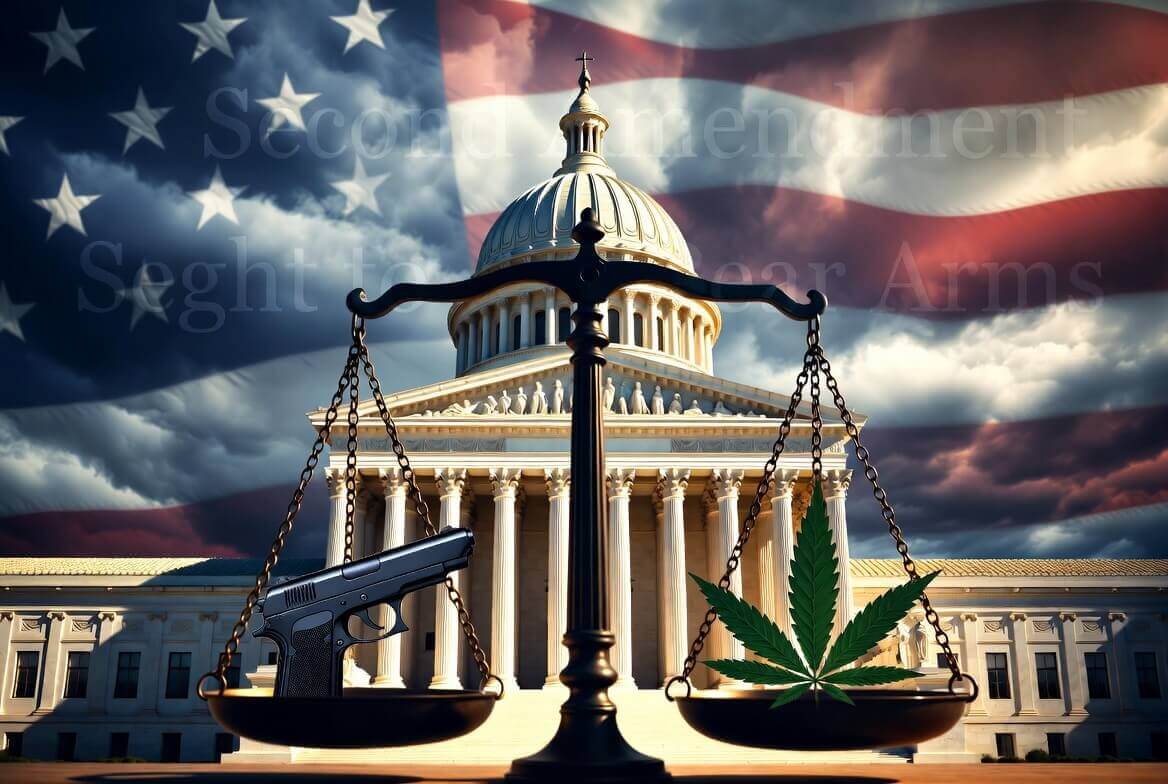
    In a blockbuster showdown at the Supreme Court, the Second Amendment is flexing its muscles against one of the most absurd federal gun bans out there: the prohibition on firearm ownership for anyone who uses marijuana—even in states where it’s totally legal. That’s right, 18 U.S.C. § 922(g)(3) treats a puff of legal weed like you’re a dangerous felon, stripping your gun rights under the guise of the Gun Control Act of 1968. But post-New York State Rifle & Pistol Association v. Bruen (2022), the justices are grilling lawyers on whether this nonsense has any roots in our nation’s history. Spoiler: It doesn’t.

    U.S. Supreme Court justices during oral arguments on Second Amendment case challenging federal gun ban for marijuana users.

    The Case at Hand: Weed Smokers vs. the Feds

    This isn’t some hypothetical. Take guys like Bryan Harrison from Texas or Zackey Rahimi—wait, Rahimi’s a different beast, but the principle echoes. In the spotlight is a challenge to §922(g)(3), which bars “unlawful users of or addicted to any controlled substance” from possessing firearms. Marijuana’s still Schedule I federally, so even if your state says “light up,” Uncle Sam says “no guns for you.”

    The Fifth Circuit struck down the ban for one defendant, ruling it violated Bruen’s test: Modern gun laws must be “consistent with this Nation’s historical tradition of firearm regulation.” No Founding-era equivalent exists for banning guns based on substance use. Booze? Heck, the Founders loved their ale. Opium dens in the 1800s? Gun-toting patrons aplenty. The government scrambled for “analogues” like 19th-century laws against “habitual drunkards,” but even Justice Kavanaugh poked holes: “Alcohol was ubiquitous then; drugs weren’t regulated like today.”

    During oral arguments, the Court wrestled with this. Solicitor General Elizabeth Prelogar defended the ban, claiming it’s about public safety—users might be impaired. But Justice Gorsuch fired back: “What about alcohol? We don’t disarm everyone who drinks.” Justice Barrett questioned if “unlawful user” is even clear—self-certify on Form 4473? Justice Jackson worried about kids with ADHD meds. The skepticism was thick; even liberal justices seemed uneasy with the breadth.

    Bruen’s Shadow Looms Large

    Bruen flipped the script on gun control. No more “interest balancing” or “means-end scrutiny.” Show us the history, or pack it up. For §922(g)(3), the feds’ historical grab-bag is pathetic:

    • Drunkard laws: Sure, some states disarmed “habitual drunkards” in the 1800s, but alcohol was legal and culturally accepted. Marijuana? Criminalized in the 20th century via racist drug wars.
    • Mental health commitments: Irrelevant—pot use isn’t a mental defect.
    • Lunacy laws: Colonial holdovers for the truly dangerous, not casual users.

    Justice Thomas, a 2A rockstar, likely sees through it. The historical record shows the Second Amendment protected arms for the “virtuous citizen,” but “virtue” meant law-abiding, not substance-free. Post-Prohibition, we didn’t ban guns for beer drinkers. This is a modern invention, born from the War on Drugs, not the Founding.

    Why This Matters for Every Gun Owner

    Don’t think this is just for stoners. Slippery slope alert: If the feds can disarm you for legal weed, what’s next? CBD oil? Prescription painkillers? Hell, caffeine addicts? This ban affects millions—over 50 million Americans have tried pot, and 18 states plus D.C. have legalized recreational use. Yet ATF Form 4473 asks if you’re an “unlawful user,” and lying is a felony.

    Pro-2A warriors like the Firearms Policy Coalition and Second Amendment Foundation are leading the charge. They’ve won at lower courts, forcing SCOTUS to confront Bruen’s bite. A ruling striking this down would shred another §922(g) prohibitor, paving the way for challenges to felon-in-possession (g(1)), domestic violence (g(9)), and more.

    Shifting drug laws amplify the farce. As states nullify federal pot prohibition, why should 2A rights suffer? The Founders didn’t envision a nanny state disarming based on FDA schedules. This is peak federal overreach.

    What Happens Next?

    Decision expected by summer 2025. If SCOTUS guts §922(g)(3), expect fireworks: ATF in chaos, states celebrating, gun grabbers wailing. Even if narrowed (say, only for “addicts”), it’s a win—further eroding Biden’s gun control empire.

    Gun owners, stay vigilant. Support orgs fighting these battles. Write your reps demanding full repeal of 922(g). The Second Amendment isn’t conditional on your vices—it’s absolute.

    Shall not be infringed. Period.

    Stay armed, stay free. Follow GunStuff.tv for more 2A firepower.
    Join the Fight

    References

  • D.C. Court of Appeals Strikes Down Ban on Large-Capacity Magazines as Unconstitutional

    D.C. Court of Appeals Strikes Down Ban on Large-Capacity Magazines as Unconstitutional

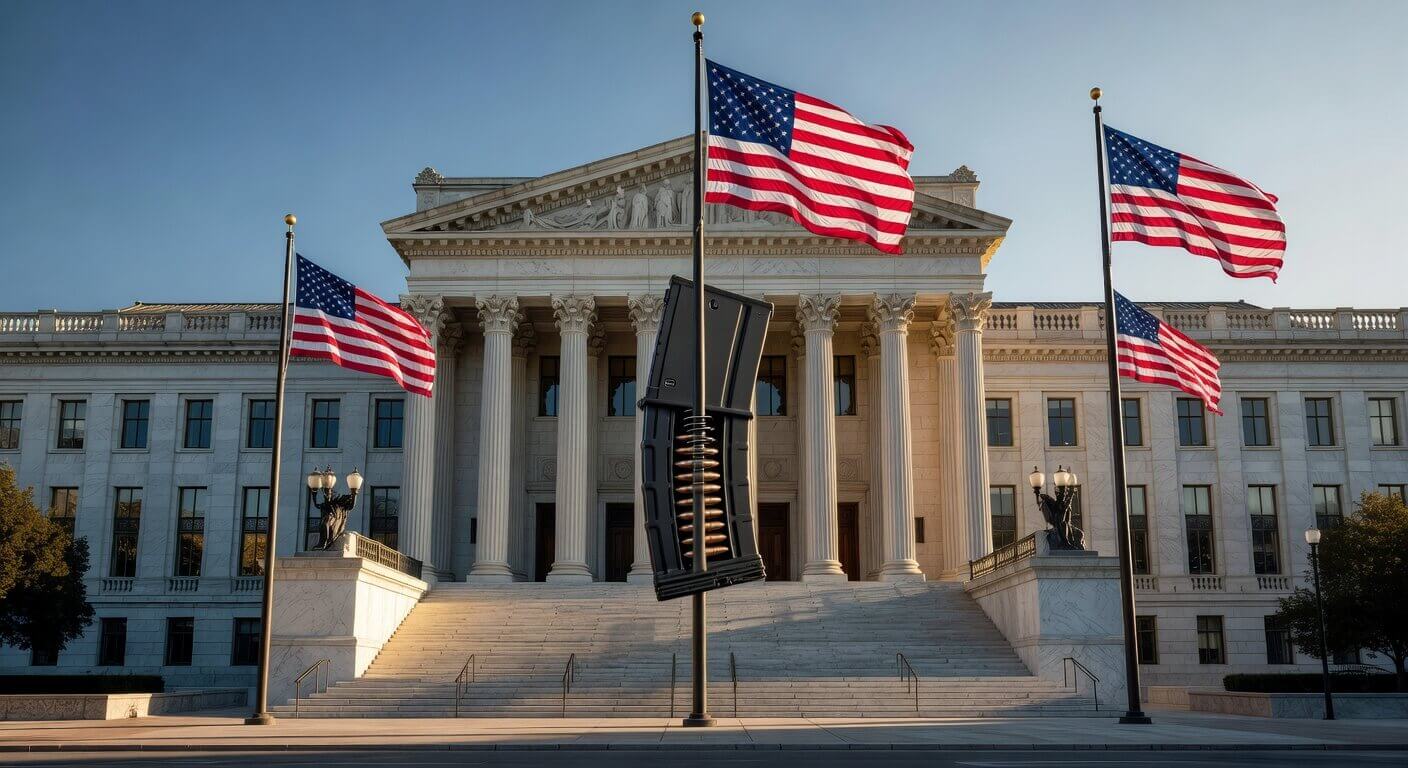
    In a resounding victory for law-abiding gun owners everywhere, the District of Columbia’s Court of Appeals has just delivered a knockout punch to the city’s tyrannical ban on so-called “large-capacity” magazines. That’s right—magazines holding more than 10 rounds are now officially protected under the Second Amendment, and a wrongful conviction has been tossed out like yesterday’s hoplophobe talking points.

    The Case That Cracked the Nut

    At the heart of this decision is the story of a D.C. resident who faced prosecution simply for possessing magazines that hold more than 10 rounds—standard equipment for most modern defensive firearms. The court didn’t mince words: these magazines are “arms” protected by the Second Amendment. Reversing the lower court’s conviction, the appeals panel ruled that D.C.’s ban fails the post-New York State Rifle & Pistol Association v. Bruen test, which demands that gun restrictions be rooted in our nation’s historical tradition of firearm regulation.

    Bruen, decided by the Supreme Court in 2022, flipped the script on gun control activism by rejecting subjective “balancing tests” and interest-balancing in favor of history and tradition. D.C.’s magazine ban? No historical analogue. Zip. Zero. Nada. Judges recognized that limiting magazines to 10 rounds is an arbitrary modern invention, not some sacred founding-era principle.

    “The District’s large-capacity magazine ban is inconsistent with the Nation’s historical tradition of firearm regulation and therefore violates the Second Amendment.” — D.C. Court of Appeals

    Why Standard-Capacity Mags Matter

    Let’s be real: in a self-defense scenario, fumbling with reloads while some dirtbag is charging you isn’t a Hollywood slow-mo—it’s a nightmare. Standard-capacity magazines (what the gun-grabbers sneeringly call “high-capacity”) give you the firepower edge you need without relying on perfect aim under stress. They’re not for spray-and-pray mall rampages; they’re for protecting your family when seconds count.

    This ruling affirms what we’ve known all along: magazines are arms. They’re integral components of the firearms our Founders enshrined in the Bill of Rights. D.C., the self-proclaimed epicenter of nanny-state overreach, just got schooled on the Constitution.

    Ripple Effects Nationwide

    This isn’t just a D.C. win—it’s a blueprint for dismantling similar bans in places like California, New York, New Jersey, and beyond. Post-Bruen, courts from coast to coast have been striking down mag limits, ghost gun rules, and assault weapon bans. Remember Duncan v. Bonta in California? That Ninth Circuit smackdown on the state’s mag ban is heading to the Supreme Court, and decisions like this one pile on the pressure.

    • California: 10-round limit challenged and crumbling.
    • New York: SAFE Act mag bans under fire.
    • Illinois: Recent laws facing lawsuits that cite Bruen directly.

    Anti-gunners are fuming, but their house of cards is collapsing. Every victory like this erodes their narrative that “common-sense” restrictions are bulletproof.

    What’s Next? Stay Locked and Loaded

    Celebrate this win, patriots, but don’t holster your vigilance. D.C. politicians might appeal, and Bloomberg-funded groups are already lawyering up. Support orgs like the NRA, GOA, and FPC that fought tooth and nail for this. Hit the range, train hard, and vote out the authoritarians who think your rights are negotiable.

    The Second Amendment isn’t a suggestion—it’s the law of the land. Today, D.C. learned that the hard way. Tomorrow? More states. Who’s with me?

    Stay strapped, stay free.

    — Your GunStuff.tv Team

    Join The Fight

    References