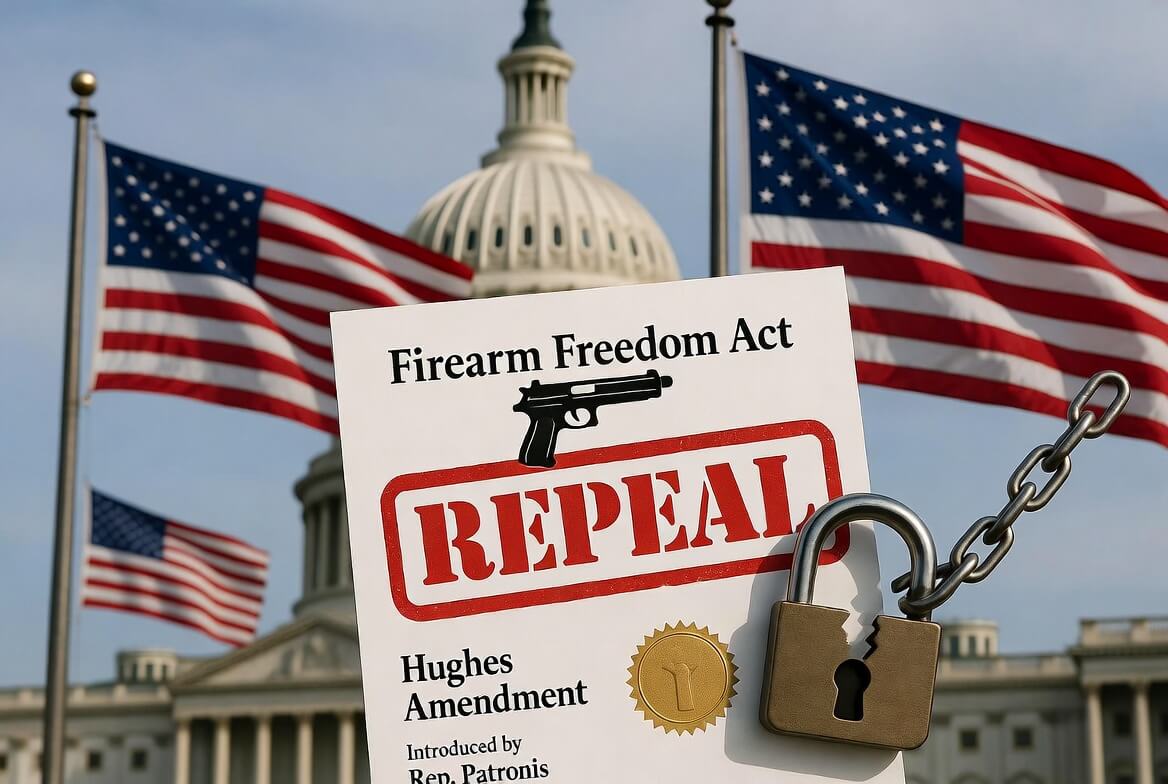
In a bold move that has Second Amendment advocates cheering, Florida Congressman Jimmy Patronis has stepped up to challenge one of the most restrictive gun control measures still on the books. His Firearm Freedom Act targets the outdated Hughes Amendment head-on, promising to return machine gun ownership rights to law-abiding citizens and redirect federal resources where they actually belong—stopping violent criminals.

The 1986 Hughes Amendment slipped into the Firearm Owners Protection Act under questionable circumstances, effectively freezing the civilian market for new machine guns. Since then, only those rare pre-1986 transferable firearms have remained legal, driving prices into the stratosphere and turning a once-common category of firearms into an elite collector’s item. Patronis’s legislation aims to wipe that restriction away entirely, restoring the pre-1986 landscape where law-abiding Americans could purchase and own these firearms without artificial barriers.
Restoring Constitutional Balance
Proponents argue that the Hughes Amendment has always been a constitutional outlier. The Second Amendment doesn’t come with an expiration date or a “no machine guns after 1986” clause. By repealing this amendment, the Firearm Freedom Act would realign federal policy with the original understanding of the right to keep and bear arms. This isn’t about arming criminals—it’s about removing an arbitrary roadblock that has done nothing to enhance public safety while punishing responsible owners.
The bill also emphasizes smarter enforcement priorities. Instead of wasting resources harassing FFL dealers and collectors over technicalities, federal agencies could focus on prosecuting actual gun crimes committed by prohibited persons. That’s the kind of targeted approach that makes sense and delivers real results.
What This Means for Lawful Gun Owners
For enthusiasts and collectors, repeal would mean renewed access to a broader selection of machine guns at more reasonable prices. It would breathe new life into a segment of the firearms market that has been artificially constrained for nearly four decades. More importantly, it sends a clear message: the rights protected by the Constitution aren’t subject to bureaucratic rationing.
Patronis’s introduction of the Firearm Freedom Act on May 22, 2026, marks an important step in the ongoing effort to roll back infringements that have accumulated over the years. Supporters are already mobilizing to back the legislation, recognizing that every repeal of an unconstitutional restriction strengthens the foundation of our gun rights for future generations.
This is the kind of proactive, freedom-focused legislation that reminds us why staying engaged in the political process matters. The fight to restore full Second Amendment protections continues, and bills like this keep the momentum going in the right direction.

References
- http://patronis.house.gov/media/press-releases/congressman-patronis-introduces-the-firearm-freedom-act-to-defend-the-second-amendment
- https://firearmslaw.duke.edu/2026/04/scotus-gun-watch-4-27-2026
- https://blog.wvlegislature.gov/senate-floor-session/2026/02/12/senate-passes-second-amendment-reaffirmation-and-protection-act-bill/
- https://wapp.capitol.tn.gov/apps/BillInfo/Default?BillNumber=HB2064&ga=114
- https://www.scstatehouse.gov/sess126_2025-2026/bills/5070.htm