Tag: NFA

  • West Virginia SB 1071 Proposes State Sale of Machine Guns to Qualified Citizens

    West Virginia SB 1071 Proposes State Sale of Machine Guns to Qualified Citizens

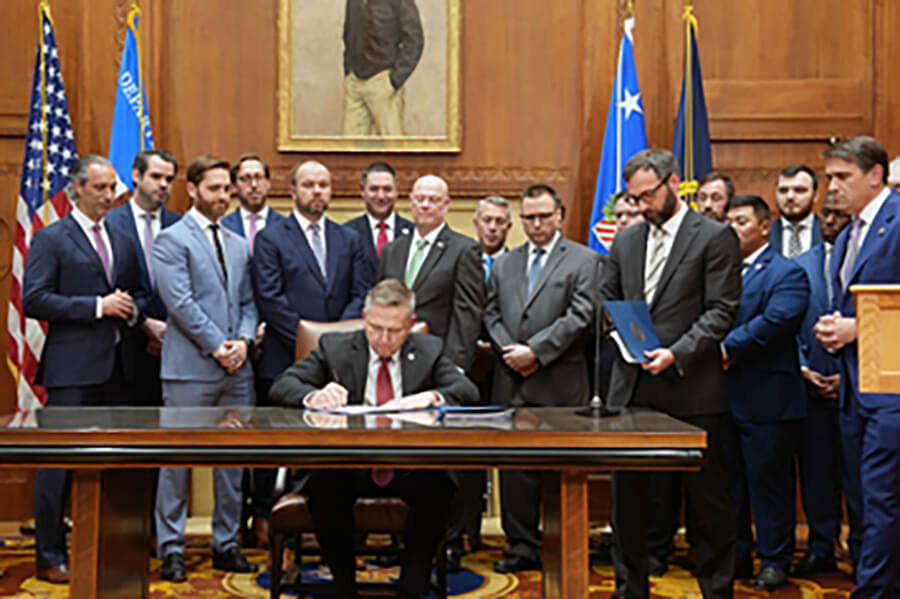
    In a bold move that could reshape the landscape of firearm rights in America, West Virginia lawmakers are pushing forward with Senate Bill 1071, known as the Public Defense and Provisioning Act. This legislation isn’t just another gun bill—it’s a direct challenge to federal restrictions, leveraging clever loopholes to put fully automatic firearms into the hands of qualified citizens through state channels.

    West Virginia State Capitol building with American flag waving in the foreground

    The bill would create an Office of Public Defense inside the West Virginia State Police. This new office would purchase machine guns in bulk and then sell them directly to eligible residents. Because the transfers flow through a government entity, they sidestep the Hughes Amendment’s ban on civilian ownership of new machine guns under the National Firearms Act. It’s a creative use of existing federal exemptions that treats citizens as part of the state’s defensive apparatus.

    Why This Matters for Liberty

    At its core, SB 1071 recognizes that the Second Amendment isn’t about hunting or sport—it’s about the people’s ability to defend themselves against threats, whether criminal or governmental. West Virginia has long stood as a beacon for gun owners, and this proposal takes that tradition to the next level by making advanced weaponry accessible without the usual bureaucratic nightmare of Form 4 transfers and endless ATF delays.

    Qualified buyers would still undergo rigorous background checks and training, ensuring only responsible, law-abiding adults gain access. This isn’t about arming everyone indiscriminately; it’s about empowering those who already meet strict standards to own the same tools used by law enforcement and military units.

    Countering Federal Overreach

    Federal gun control has steadily chipped away at our rights for decades, with the Hughes Amendment serving as one of the most blatant examples of unconstitutional overreach. By routing sales through the state police, West Virginia is asserting its sovereignty and reminding Washington that states can innovate around bad federal policy. This approach could inspire similar legislation across the country, turning the tables on decades of incremental disarmament.

    Supporters argue this strengthens the militia concept embedded in the Constitution. When citizens can acquire the same equipment as government forces, it restores balance and deters tyranny. In an era of rising crime and uncertain times, having access to effective defensive tools isn’t radical—it’s common sense.

    West Virginia’s move proves that pro-Second Amendment states don’t have to wait for Congress to fix broken laws. They can take matters into their own hands and deliver real results for gun owners. If SB 1071 passes, it won’t just be a win for West Virginians—it could mark the beginning of a nationwide resurgence in true firearm freedom.

    Join the Fight - Second Amendment Foundation

    References

  • ATF Announces Landmark Regulatory Reform Package to Reduce Burdens on Gun Owners and Businesses

    ATF Announces Landmark Regulatory Reform Package to Reduce Burdens on Gun Owners and Businesses

    In a move that has sent ripples of excitement through the firearms community, the Bureau of Alcohol, Tobacco, Firearms and Explosives (ATF) and the Department of Justice have unveiled an ambitious set of regulatory changes aimed squarely at easing the load on law-abiding gun owners and Federal Firearms Licensees alike. This coordinated release of 34 proposed and final rules under the banner of a “New Era of Reform” represents a significant shift toward modernizing decades-old regulations that have long frustrated the Second Amendment community.

    https://www.atf.gov/news/press-releases/doj-and-atf-announce-regulatory-reforms-to-reduce-burdens-law-abiding-gun-owners-and-businesses

    The timing couldn’t be better. Released in late April 2026 and aligned with executive actions protecting constitutional carry rights, these reforms target everything from outdated recordkeeping requirements to cumbersome NFA processes. FFL holders can expect streamlined operations that cut through red tape, allowing more focus on serving customers rather than wrestling with paperwork.
    Key highlights include clarified compliance guidelines under both the National Firearms Act and Gun Control Act, which promise to reduce ambiguous interpretations that have previously led to unnecessary enforcement actions. Gun owners will benefit from simplified transfer procedures and reduced administrative hurdles when dealing with suppressors, short-barreled rifles, and other NFA items. Businesses, meanwhile, gain clearer pathways for inventory management and reporting, potentially lowering operational costs across the industry.
    This package doesn’t just tweak minor details—it modernizes the entire framework. By prioritizing efficiency and fairness, the reforms acknowledge that responsible firearms ownership is a protected right, not a privilege subject to endless bureaucratic hurdles. Industry leaders are already hailing the changes as a long-overdue correction that strengthens the ecosystem supporting America’s gun culture.
    Looking ahead, these updates could pave the way for even greater innovations in compliance technology and training resources. For enthusiasts and professionals tracking ATF developments, this moment marks an encouraging step forward—one that reinforces the principle that regulations should enable, not obstruct, the exercise of Second Amendment freedoms. Stay tuned as the public comment periods unfold and the full impact takes shape.

    Join the Fight - Second Amendment Foundation

    References

  • Ninth Circuit Rules Silencers Not ‘Arms’ Protected by Second Amendment in United States v. DeBorba

    Ninth Circuit Rules Silencers Not ‘Arms’ Protected by Second Amendment in United States v. DeBorba

    The Ninth Circuit’s June 2026 ruling in United States v. DeBorba delivered yet another blow to law-abiding gun owners, declaring that firearm silencers fall outside the plain text of the Second Amendment. The court upheld the National Firearms Act’s registration and tax requirements as a “valid shall-issue licensing regime,” brushing aside arguments that these devices are essential components of modern firearms. For anyone who values hearing protection and practical self-defense tools, this decision feels like a deliberate attempt to chip away at our rights under the guise of regulation.

    Exterior view of the Ninth Circuit Court of Appeals building with American flag waving in the foreground

    Silencers aren’t some exotic gadget invented for covert operations. They’re sound moderators that reduce the ear-splitting blast of gunfire by 20-35 decibels, bringing the report down to safer levels comparable to a jackhammer rather than a jet engine. Hunters, sport shooters, and homeowners defending their families have used them for decades to protect their hearing without sacrificing effectiveness. The Ninth Circuit’s logic—that these devices aren’t “arms” themselves—ignores the reality that the Second Amendment protects the right to keep and bear arms in common use for lawful purposes, including the accessories that make those arms functional and safe.

    Why This Ruling Misses the Mark

    Under the Bruen framework, the government must show a historical tradition of regulating silencers to justify today’s restrictions. The court leaned heavily on the idea that silencers are mere accessories rather than arms, sidestepping the fact that suppressors have been commercially available and widely used since the early 1900s. Lawmakers in 1934 slapped the NFA on them during a wave of prohibition-era panic, not because of any founding-era precedent. This decision keeps that outdated burden in place, forcing Americans to pay a $200 tax, submit fingerprints and photos, and wait months for approval just to exercise a basic safety measure.

    Critics of the ruling point out the absurdity: the same court would likely view a red-dot sight or a magazine as protected if challenged directly, yet a device that simply makes shooting less damaging to your ears gets singled out. Shall-issue permitting sounds reasonable on paper, but the NFA process creates de facto barriers, especially for those in rural areas or with busy lives who can’t navigate endless bureaucracy.

    Protecting Our Hearing and Our Rights

    Pro-2A advocates have long argued that forcing people to shoot unsuppressed increases permanent hearing damage, a problem that affects veterans, competitive shooters, and new gun owners alike. European countries treat suppressors as standard safety equipment with minimal restrictions, and crime rates haven’t skyrocketed because of it. Here at home, the Ninth Circuit’s stance only fuels the narrative that any improvement to firearms technology deserves extra scrutiny.

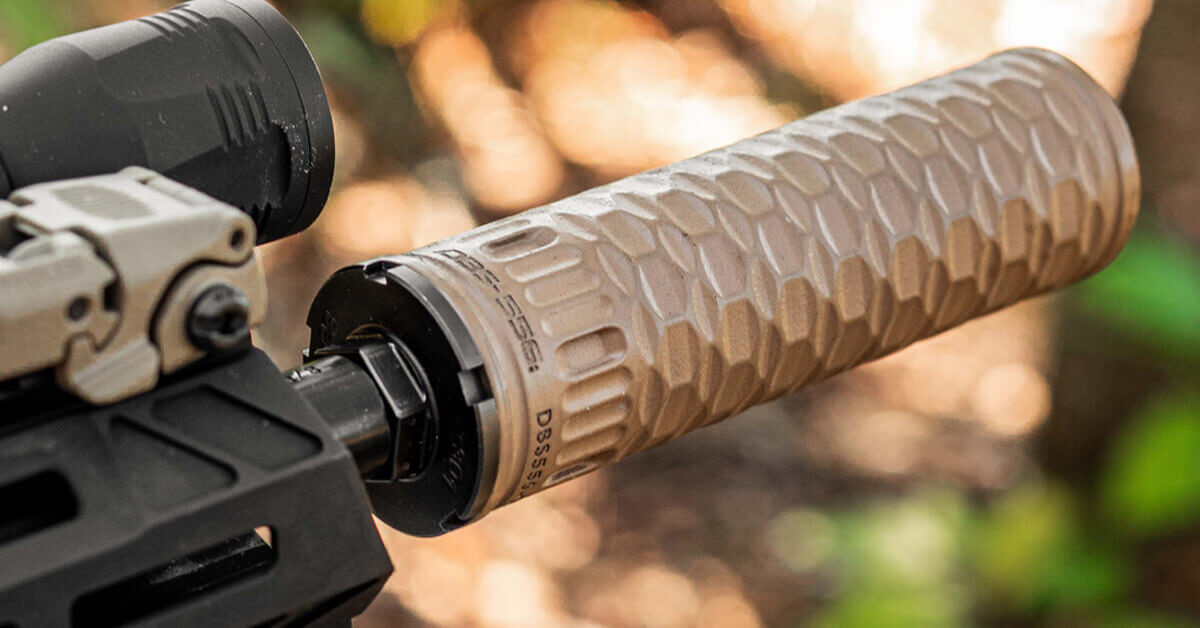
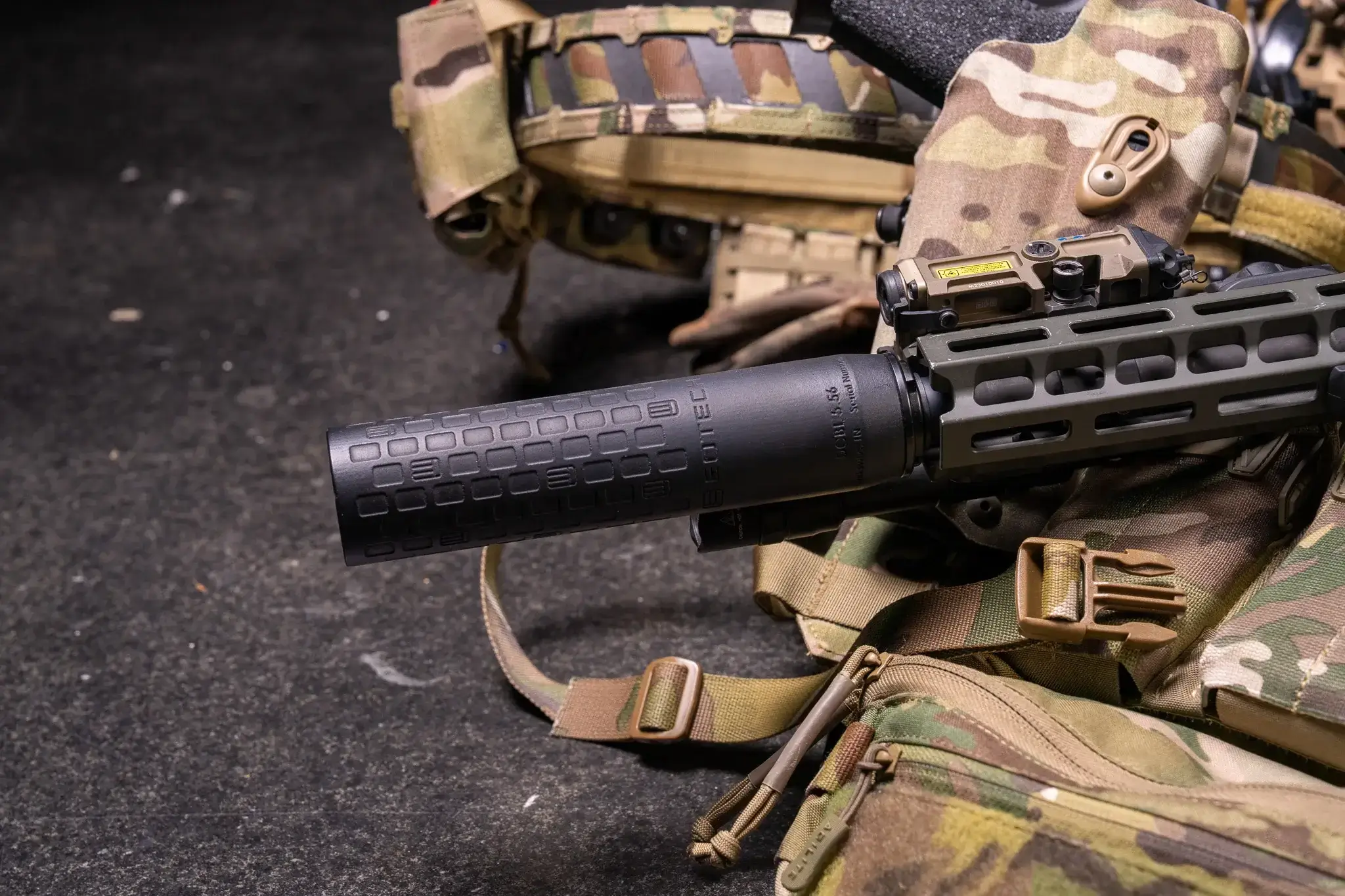
    Close-up of a high-quality suppressor mounted on an AR-15 platform at an outdoor shooting range

    The fight doesn’t end with this opinion. DeBorba was a facial challenge, leaving room for as-applied cases and potential Supreme Court review. States within the Ninth Circuit should consider legislation to ease NFA compliance or challenge the tax stamp requirement head-on. Gun owners everywhere need to stay engaged—contact your representatives, support organizations litigating these issues, and keep demonstrating that responsible ownership includes using every tool available to shoot safely and effectively.

    Decisions like this remind us that the Second Amendment isn’t just about the gun in your safe. It’s about the full ecosystem of accessories that make that right meaningful. Silencers deserve the same protection as the firearms they enhance, and the Ninth Circuit’s refusal to acknowledge that is a setback we can’t afford to accept.

    Join the Fight - Second Amendment Foundation

    References

  • ATF Proposes Streamlined NFA Markings and Spousal Joint Registration Rules

    ATF Proposes Streamlined NFA Markings and Spousal Joint Registration Rules

    The ATF’s latest proposals represent a welcome shift toward common-sense reforms in the often-frustrating world of National Firearms Act compliance. For years, law-abiding Americans have dealt with redundant markings and cumbersome paperwork that served little purpose beyond bureaucratic expansion. These new rules aim to cut through some of that red tape, letting responsible gun owners focus on what matters most: exercising their Second Amendment rights without unnecessary hurdles.

    Streamlining Markings for Makers

    Under the proposed changes, NFA firearm makers will no longer need to apply duplicate engravings when the original manufacturer markings already meet the requirements. This eliminates pointless repetition that adds time, cost, and potential for error during the build process. Imagine spending hours carefully engraving a receiver only to realize the factory stamp already covers the essentials—those days could soon be behind us. The move acknowledges that over-regulation doesn’t enhance safety; it simply burdens the very citizens who follow the rules.

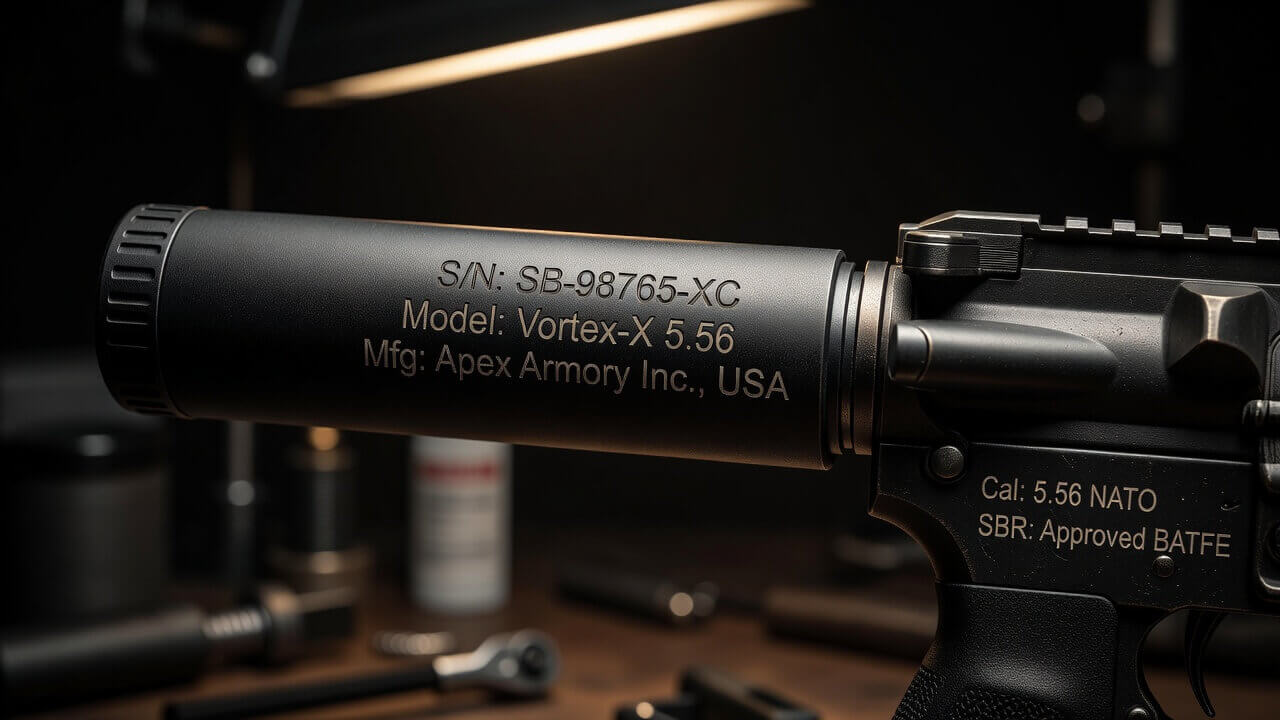
    Close-up of precise factory markings on a suppressor and short-barreled rifle receiver

    Joint Registration for Married Couples

    Perhaps the most family-friendly update allows spouses to file joint applications for NFA registration and transfers. No more forcing couples into expensive trusts just to share ownership of a suppressor or short-barreled rifle. This directly reduces administrative costs and paperwork while recognizing that marriage itself provides a stable legal framework for joint property. Pro-Second Amendment families will appreciate the ability to build collections together without jumping through extra hoops designed for unrelated parties.

    These proposals reinforce a key principle: the right to keep and bear arms belongs to individuals and families, not government gatekeepers. By cutting redundant requirements, the ATF is taking small but meaningful steps toward respecting the Constitution over expanding its own reach. Gun owners who value efficiency and fairness should view this as progress worth celebrating—and monitoring closely as the rules move forward.

    Stay tuned for updates, and keep your voice heard in support of further reforms that prioritize liberty over bureaucracy.

    Join the Fight - Second Amendment Foundation

    References

  • ATF Announces 34 Rule Revisions to Simplify Suppressor Ownership and Deregulate Accessories

    ATF Announces 34 Rule Revisions to Simplify Suppressor Ownership and Deregulate Accessories

    In a major victory for gun owners across the nation, the Department of Justice and ATF have delivered long-overdue relief with a sweeping set of 34 rule changes. These revisions slash unnecessary hurdles for suppressor ownership while recognizing that law-abiding Americans deserve practical access to hearing protection without endless bureaucratic interference.

    ATF Director Robert Cekada speaking at a podium with American flags and firearm accessories in the background

    Under the leadership of new ATF Director Robert Cekada, the agency is finally prioritizing efficiency over obstruction. The package includes both final rules and proposed updates that cut through years of tangled paperwork requirements. Owners will soon enjoy streamlined applications, faster approvals, and clearer guidelines that treat suppressors as the safety tools they are rather than objects of suspicion.

    Interstate travel just got simpler too. Expanded protections now allow responsible citizens to transport their legally owned suppressors across state lines without jumping through multiple layers of prior approval. This change alone removes a significant barrier for hunters, sport shooters, and families who cross borders regularly for competitions or recreation.

    Manufacturers also benefit from reduced compliance burdens, which should translate into more innovation and availability of quality products. By deregulating certain accessories and clarifying rules that previously created gray areas, the revisions encourage American businesses to focus on building better gear instead of navigating regulatory minefields.

    Pro-Second Amendment groups have quickly praised the moves as a return to common-sense governance. Rather than expanding government control, these updates empower individuals to exercise their rights responsibly. As Director Cekada emphasized in the announcement, the focus remains on protecting public safety through voluntary compliance, not punishing law-abiding citizens with red tape.

    For everyday gun owners, the message is clear: your rights are being restored one practical reform at a time. Whether you’re a first-time suppressor buyer or a longtime enthusiast, these changes mean less time filling out forms and more time at the range enjoying the peace and quiet that comes with proper hearing protection.

    Stay informed and keep advocating. Reforms like these prove that consistent pressure for liberty can shift even entrenched agencies toward respecting the Constitution.

    Join the Fight - Second Amendment Foundation

    References

  • ATF Proposes Removing Pistol Brace ‘Factoring Criteria’ from Rifle Definition in Major 2023 Rule Repeal

    ATF Proposes Removing Pistol Brace ‘Factoring Criteria’ from Rifle Definition in Major 2023 Rule Repeal

    In a massive win for Second Amendment advocates, the ATF has finally thrown in the towel on one of its most despised rules. On May 6, 2026, the Bureau of Alcohol, Tobacco, Firearms and Explosives dropped a Notice of Proposed Rulemaking (NPRM) to completely scrap the infamous 2023 “Factoring Criteria for Firearms with Attached Stabilizing Braces” rule. This bureaucratic nightmare reclassified millions of perfectly legal pistols with stabilizing braces as short-barreled rifles (SBRs) under the National Firearms Act (NFA), forcing gun owners to register, pay taxes, or destroy their property. Not anymore—if this proposal sticks.

    The 2023 Rule: ATF’s Overreach Exposed

    Let’s rewind. Back in 2023, the ATF unleashed a 468-page monster of a rule that invented “factoring criteria” to determine if your pistol brace made it a rifle. Criteria like surface area for shouldering, rear surface length, and even weapon weight? It was a blatant attempt to sidestep Congress and turn everyday AR pistols into NFA headaches. Gun owners flooded the courts, and judges across the country—including the Fifth Circuit—slapped it down as “arbitrary and capricious.” Courts ruled it violated the Administrative Procedure Act and ignored statutory definitions of rifles and pistols.

    This wasn’t regulation; it was regulation by fiat. The ATF twisted the law to disarm law-abiding citizens, all while violent criminals roam free with unregistered ghost guns and sawed-off shotguns.

    What’s Changing? Back to Sanity

    The new NPRM proposes yanking the entire offending section—§ 478.11—right out of the Code of Federal Regulations. No more “factoring criteria.” No more forced reclassification. Pistols with braces return to their pre-2023 status: legal, unregistered, and brace-ready for those with disabilities or anyone who prefers the stability.

    This aligns perfectly with the DOJ and ATF’s April 29 announcement of 34 regulatory reforms aimed at slashing red tape for firearm owners. It’s a direct response to judicial smackdowns and a nod to the reality that the 2023 rule was a legal dud from day one.

    Why This Matters for You

    • Clarity Restored: No more guessing if your brace setup passes ATF’s made-up tests. Stick to the statute: Is it designed to be fired from the shoulder? Boom—rifle. Otherwise? Pistol.
    • Millions Spared: An estimated 3-40 million firearms affected. That’s millions in avoided taxes and paperwork.
    • Precedent Set: Courts holding agencies accountable. This paves the way for challenging other ATF nonsense like the “frame or receiver” rule.
    • 2A Victory: Proof that pushback works. From lawsuits by groups like FPC, GOA, and SAF to individual owners registering braces under protest—the resistance paid off.

    But It’s Not Over Yet—Act Now!

    This is a proposal. There’s a public comment period, so hit the Federal Register docket (docket no. ATF 2026R-XX) and submit your support. Tell them why the 2023 rule was tyrannical and why rescinding it protects disabled shooters, home defenders, and everyday patriots.

    Also, keep pressure on Congress. Support bills like the SHORT Act to codify pistol brace freedom and prevent future ATF games. Your voice—and your vote—keep the Second Amendment strong.

    American flag waving over AR pistol with brace, celebrating ATF rule repeal (via pewpewtactical.com)

    The ATF’s pistol brace blunder is crumbling, and it’s a beacon of hope in the fight for our rights. Stay vigilant, stay armed, and stay free. What are your thoughts on this repeal? Drop a comment below!

    Stay tuned to GunStuff.tv for updates as this NPRM progresses. Molon Labe.

    Join the Fight - Second Amendment Foundation

    References

  • NRA, SAF, and Allies File Federal Lawsuit Challenging Constitutionality of 1934 National Firearms Act

    NRA, SAF, and Allies File Federal Lawsuit Challenging Constitutionality of 1934 National Firearms Act

    In a groundbreaking legal assault on one of the oldest federal gun control measures in American history, major Second Amendment organizations have joined forces to challenge the core provisions of the 1934 National Firearms Act. This lawsuit arrives at a pivotal moment, riding the momentum of the Supreme Court’s Bruen decision and demanding that courts recognize how registration schemes, taxes, and outright restrictions on common firearms accessories simply cannot survive constitutional scrutiny today.

    The plaintiffs argue that the NFA’s heavy-handed requirements for short-barreled rifles, short-barreled shotguns, and suppressors amount to an unconstitutional burden on the right to keep and bear arms. Rather than treating these items as dangerous oddities from the gangster era, the filing points out that they are ordinary, commonly used tools for self-defense, sport shooting, and hearing protection. Post-Bruen, any law regulating arms must align with the nation’s historical tradition—and the NFA’s 90-year-old framework fails that test spectacularly.

    Detailed image of federal court documents and gavel representing the new NFA lawsuit filing

    The coalition behind this effort includes the National Rifle Association, the American Suppressor Association, the Second Amendment Foundation, and the Firearms Policy Coalition, along with individual plaintiffs who have faced the full weight of NFA compliance. Their complaint seeks both declaratory relief to declare key sections unconstitutional and injunctive relief to halt enforcement of the registration, taxation, and transfer restrictions. This isn’t a narrow technical challenge—it’s a direct strike at the heart of a law that has long treated peaceable citizens like potential criminals for wanting to own a suppressor or a properly configured rifle.

    Critics of the NFA have long noted how its $200 tax stamp—unchanged since the Great Depression—functions more as a barrier to entry than any meaningful public safety measure. Suppressors, for example, reduce noise pollution and protect hearing without turning firearms into silent assassins as Hollywood would have us believe. Short-barreled firearms offer maneuverability advantages in home defense scenarios, yet the NFA forces owners through a months-long bureaucratic maze complete with fingerprints, photos, and local law enforcement notification. The Bruen framework makes clear that such hurdles lack historical analogues from the Founding era, when Americans freely possessed and modified their arms.

    This lawsuit represents more than legal maneuvering. It signals a renewed commitment to rolling back New Deal-era restrictions that have lingered far too long in the shadows of the Second Amendment. If successful, it could open the door for millions of Americans to exercise their rights without government permission slips or punitive taxes. Supporters across the pro-2A community are watching closely, recognizing that victories like this build on the momentum from recent Supreme Court wins and state-level reforms.

    As the case moves forward in federal court, it serves as a powerful reminder that constitutional rights aren’t privileges granted by bureaucrats—they are inherent protections that demand vigilant defense. The fight against the NFA’s outdated framework is just beginning, and this coalition is bringing serious firepower to the battle.

    Join the Fight - Second Amendment Foundation

    References

  • ATF Publishes Final Rule on Changes to National Firearms Act Tax Remittance Provisions

    ATF Publishes Final Rule on Changes to National Firearms Act Tax Remittance Provisions

    Big news for NFA enthusiasts and Second Amendment supporters: the ATF has finally dropped their final rule updating the National Firearms Act (NFA) tax remittance provisions. This isn’t just bureaucratic housekeeping—it’s a direct result of the One Big Beautiful Bill Act, which slashed transfer taxes on key items like suppressors (now a glorious $0!), short-barreled rifles (SBRs), short-barreled shotguns (SBSs), and more. If you’ve been waiting to build out your collection without the old tax sting, this is your green light.

    What Does the Rule Actually Change?

    The ATF’s final rule, published in the Federal Register, aligns their regs with the statutory updates from the One Big Beautiful Bill Act. Here’s the breakdown:

    • Suppressors: Tax dropped from $200 to $0. Hearing protection just got a whole lot more accessible.
    • SBRs and SBSs: Reduced taxes make these compact powerhouses easier to add to your arsenal.
    • Other NFA items: AOWs, destructive devices, and machine guns see adjusted rates, easing the financial burden.

    Key update? The rule modernizes how taxes are remitted during the Form 1 (making) and Form 4 (transfer) processes. No more outdated methods clashing with digital payments or the new zero-tax reality. It’s all about regulatory consistency, which means fewer headaches for FFLs and applicants alike.

    Why This Matters for Gun Owners

    Let’s be real: the NFA has been a regulatory beast since 1934, with that infamous $200 tax stamp acting as a de facto ban for decades due to inflation. The One Big Beautiful Bill Act flipped the script, and now the ATF is playing catch-up. With NFA applications surging—thanks to pent-up demand from law-abiding Americans exercising their rights—this rule paves the way for faster processing.

    Imagine submitting your Form 4 for that shiny new suppressor and not forking over $200. Or finally SBR’ing your trusty AR without the wallet hit. This is pro-2A progress in action, proving that legislative wins can force even the most entrenched bureaucracies to adapt.

    “These changes ensure that the regulations reflect the will of Congress and provide clarity for the regulated community.” – ATF Statement

    Translation: More freedom, less friction. But don’t pop the champagne just yet—wait times are still a thing, so get your paperwork in order and consider an FFL trust for multi-owner flexibility.

    What’s Next? Stay Vigilant

    This rule takes effect 30 days after publication, so mark your calendars. If you’re new to NFA, head to the ATF’s site for the full rule and updated forms. Pro tip: Use eForms for quicker submissions, especially with the application boom.

    At GunStuff.tv, we’re thrilled to see barriers crumbling. Share this with your shooting buddies, hit that like button, and subscribe for more 2A updates. The fight for our rights continues—let’s keep the momentum going!

    Stay armed, stay free.

    Join the Fight - Second Amendment Foundation

    References

  • DOJ and ATF Release Landmark 34-Rule Package Bolstering 2A Rights: Easier Interstate Transport, FFL Sales, and NFA Processes

    DOJ and ATF Release Landmark 34-Rule Package Bolstering 2A Rights: Easier Interstate Transport, FFL Sales, and NFA Processes

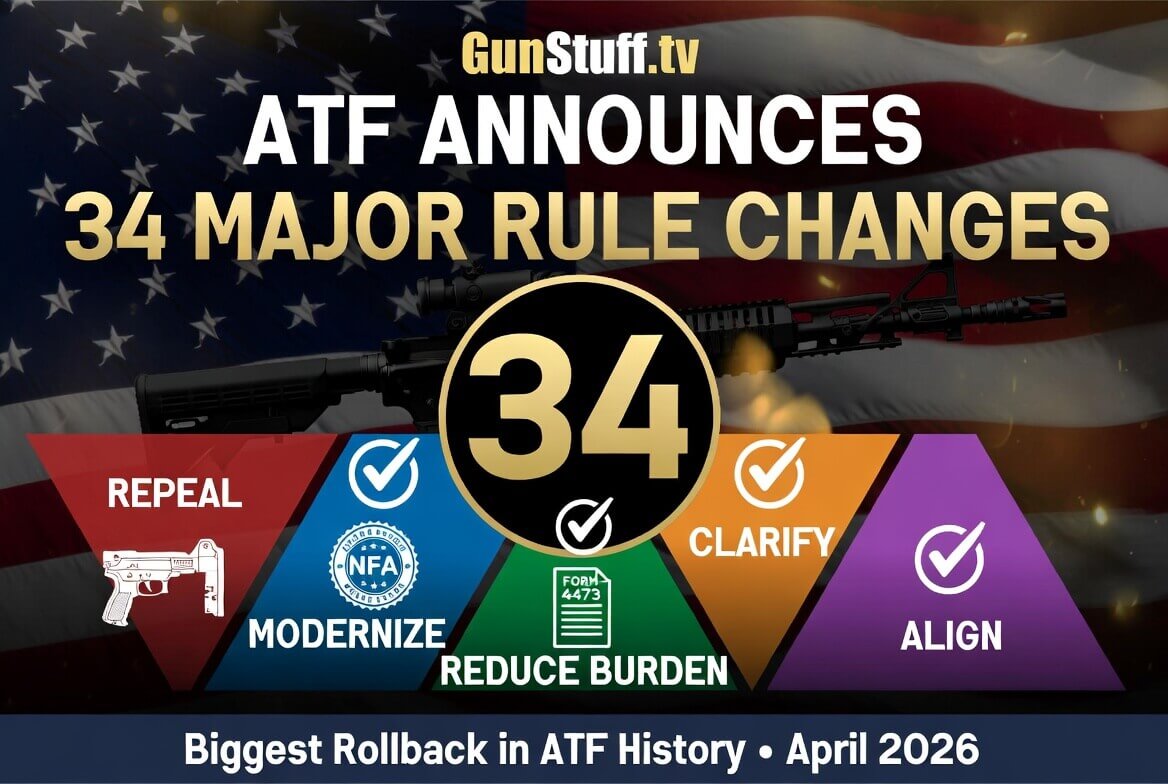
    In a massive win for Second Amendment supporters, the Department of Justice and Bureau of Alcohol, Tobacco, Firearms and Explosives (ATF) yesterday announced a landmark package of 34 notices of final and proposed rulemaking — the biggest overhaul of ATF regulations in the agency’s history.

    The reforms are aimed squarely at reducing unnecessary burdens on law-abiding gun owners and Federal Firearms Licensees (FFLs) while refocusing the agency on actual criminals. The changes stem directly from President Trump’s Executive Order 14206, “Protecting Second Amendment Rights,” following a year-long review with input from industry, gun owners, and legal experts.

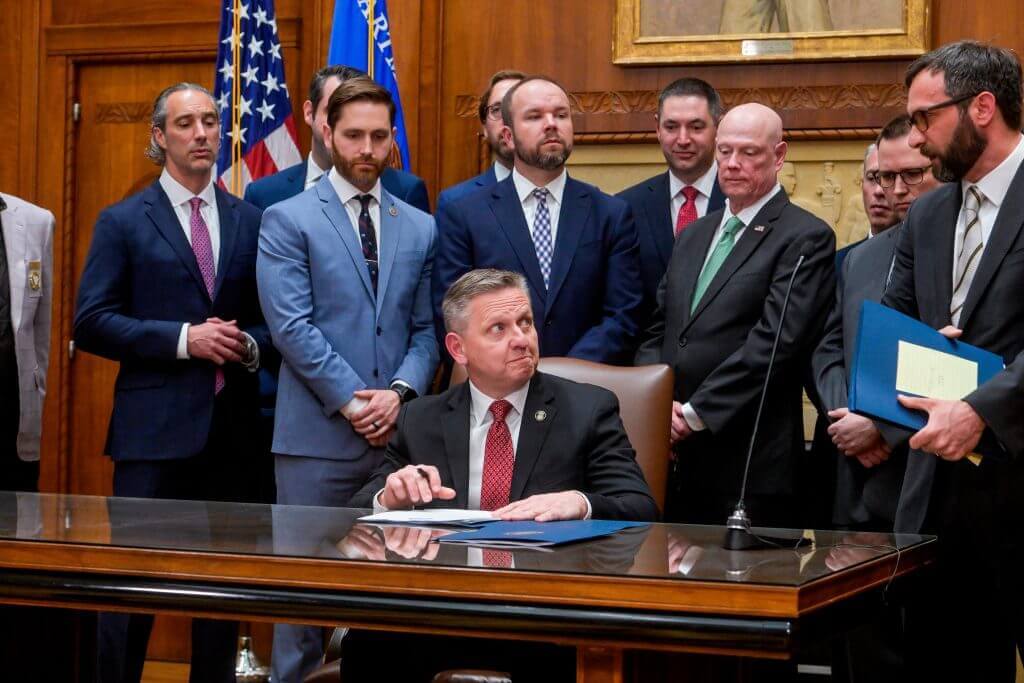
    Newly confirmed ATF Director Robert Cekada signed the package on his first day, alongside Acting Attorney General Todd Blanche.

    Picture this: You’re road-tripping from Texas to Pennsylvania with your AR-15 for a match. No more stressing over every blue-state speed trap or vague interstate transport rules. FFLs can finally sell rifles and shotguns more freely. NFA owners get real relief from paperwork and trust requirements. This package delivers on multiple fronts.

    Easing Interstate Firearm Transport: No More “Gun-Free Zone” Nightmares

    One of the crown jewels here is the clarification and expansion of interstate transport rules. Drawing from Supreme Court precedents like Bruen and Rahimi, the ATF is finalizing rules that explicitly protect travelers carrying firearms through non-resident states. Key changes include:

    • Recognizing federal Firearm Owners’ Protection Act (FOPA) protections for unloaded, locked firearms in vehicles, even in states with draconian “assault weapon” bans.
    • A new “safe passage” presumption for hunters, sport shooters, and travelers with valid permits from their home state.
    • Streamlined documentation requirements—no more notary-stamped affidavits just to prove you’re not a criminal.

    Gun owners have been at the mercy of ATF’s vague guidance for too long. Now, with these five proposed and three final rules, your Second Amendment rights go where you go.

    Picture this: You’re road-tripping from Texas to Pennsylvania with your AR-15 for a match. No more stressing over every blue-state speed trap or vague interstate transport rules. FFLs can finally sell rifles and shotguns more freely. NFA owners get real relief from paperwork and trust requirements. This package delivers on multiple fronts.

    Major Repeals & Rollbacks

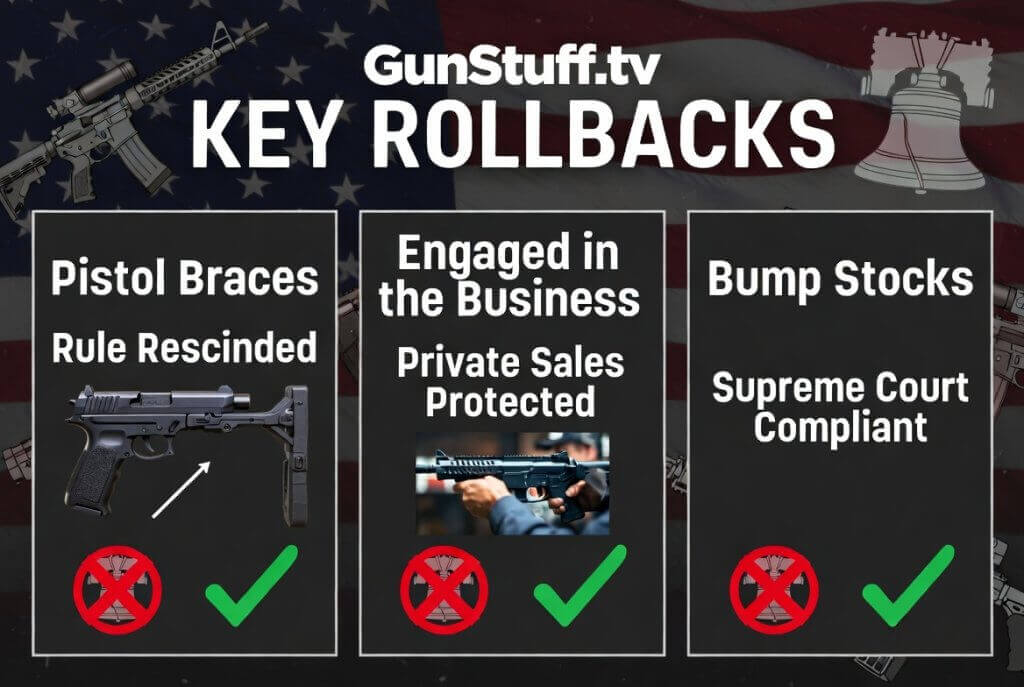
    • Pistol Stabilizing Braces (1140-AA98 – NPRM): Full rescission of the 2023 “factoring criteria” rule that turned millions of braced pistols into unregistered SBRs. Courts had already largely blocked it.
    • “Engaged in the Business” Definition (1140-AB01 – NPRM): Rolls back the 2024 expansion that pushed more private sellers into needing an FFL. Returns to the statutory standard from the Bipartisan Safer Communities Act.
    • Machine Gun Definition (1140-AA60 – FINAL RULE): Removes bump-stock language to comply with the Supreme Court’s Garland v. Cargill decision.
    • Youth Handgun Safety Act Notices (1140-A87 – NPRM): Eliminates outdated sign-posting and paperwork requirements.

    Modernizing Outdated Paperwork

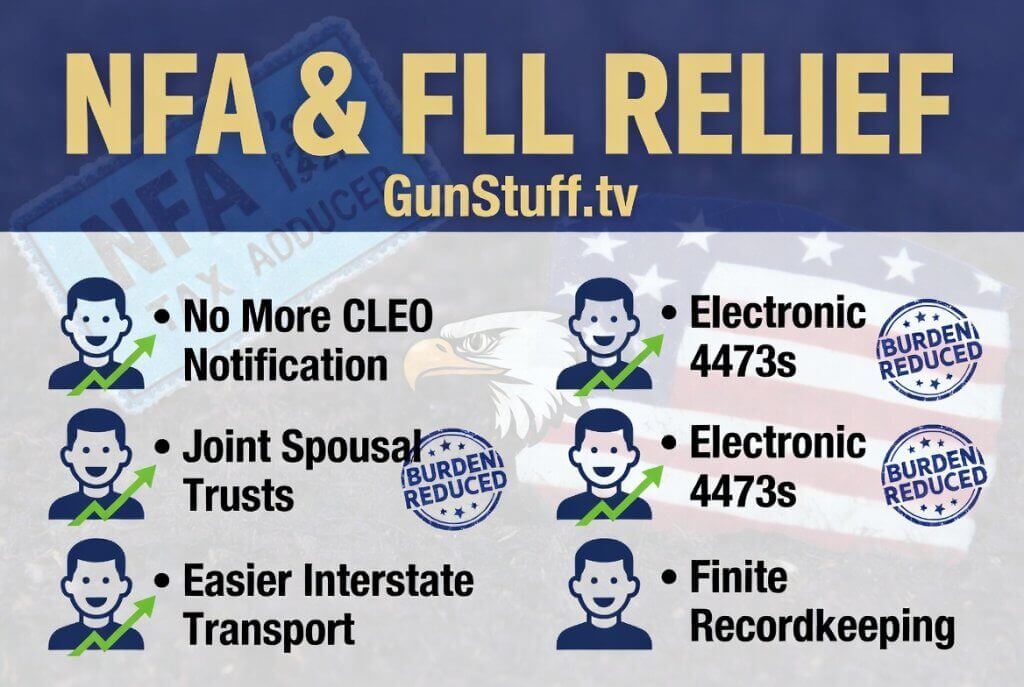
    • Comprehensive overhaul of ATF Form 4473 (1140-AA82 – NPRM): Streamlined checks, longer NICS validity, electronic forms, auto-population, and digital attachments.
    • Electronic Recordkeeping (1140-AA94 – NPRM): Codifies use of electronic A&D books and 4473s.
    • Finite Records Retention (1140-AA95 – NPRM): Ends the “keep forever” rule — now limited to 20 or 30 years.
    • eZ Check for FFL-to-FFL transfers (1140-AA61 – Direct Final Rule).
    • Non-Over-the-Counter (NOTC) sales (1140-AB05 – NPRM): Easier same-state sales with modern verification.

    Big Relief for NFA Owners & FFLs

    • NFA Interstate Transport (1140-AA89 – NPRM): No more advance ATF approval or notice for trips of 365 days or less.
    • Joint Spousal NFA Registration (1140-AB00 – NPRM): Married couples can register jointly without forming a trust. Spousal transfers simplified.
    • No More CLEO Notification (1140-AA65 – NPRM).
    • Interstate Transportation Clarifications (1140-AA73 – NPRM): Normal travel stops (gas, food, lodging, emergencies) are explicitly protected.
    • Special Occupational Tax (SOT) Clarification and other simplifications for machine gun transfers, imports, and business operations.

    Additional changes modernize import rules, update definitions (including “unlawful user of controlled substances”), clarify “willful” violations, and provide better straw-purchase guidance.

    Why This Matters

    This is Trump 2.0 delivering on promises to end the regulatory war on gun owners. After years of Biden-era overreach on braces, private sales, and NFA processes, the pendulum is swinging back hard — aligned with Supreme Court precedent and common sense.

    Many rules are proposed (NPRMs) with public comment periods opening soon. Others are final or direct final. This is your chance to submit comments on Regulations.gov.

    GunStuff.tv will track each rule as it moves forward and tell you exactly when and how to comment on the ones that matter most to you.

    Bottom line: Law-abiding Americans win. Your wallet wins. The Constitution wins.

    What change excites you most — the brace repeal, NFA transport relief, electronic 4473s, or spousal trusts? Drop your thoughts in the comments and subscribe for continuing coverage.

    Stay armed, stay free.

    Join the Fight - Second Amendment Foundation

    References

  • Suppressor Sales Skyrocket in 2026: Over 1 Million NFA Forms Processed in Q1 Alone

    Suppressor Sales Skyrocket in 2026: Over 1 Million NFA Forms Processed in Q1 Alone

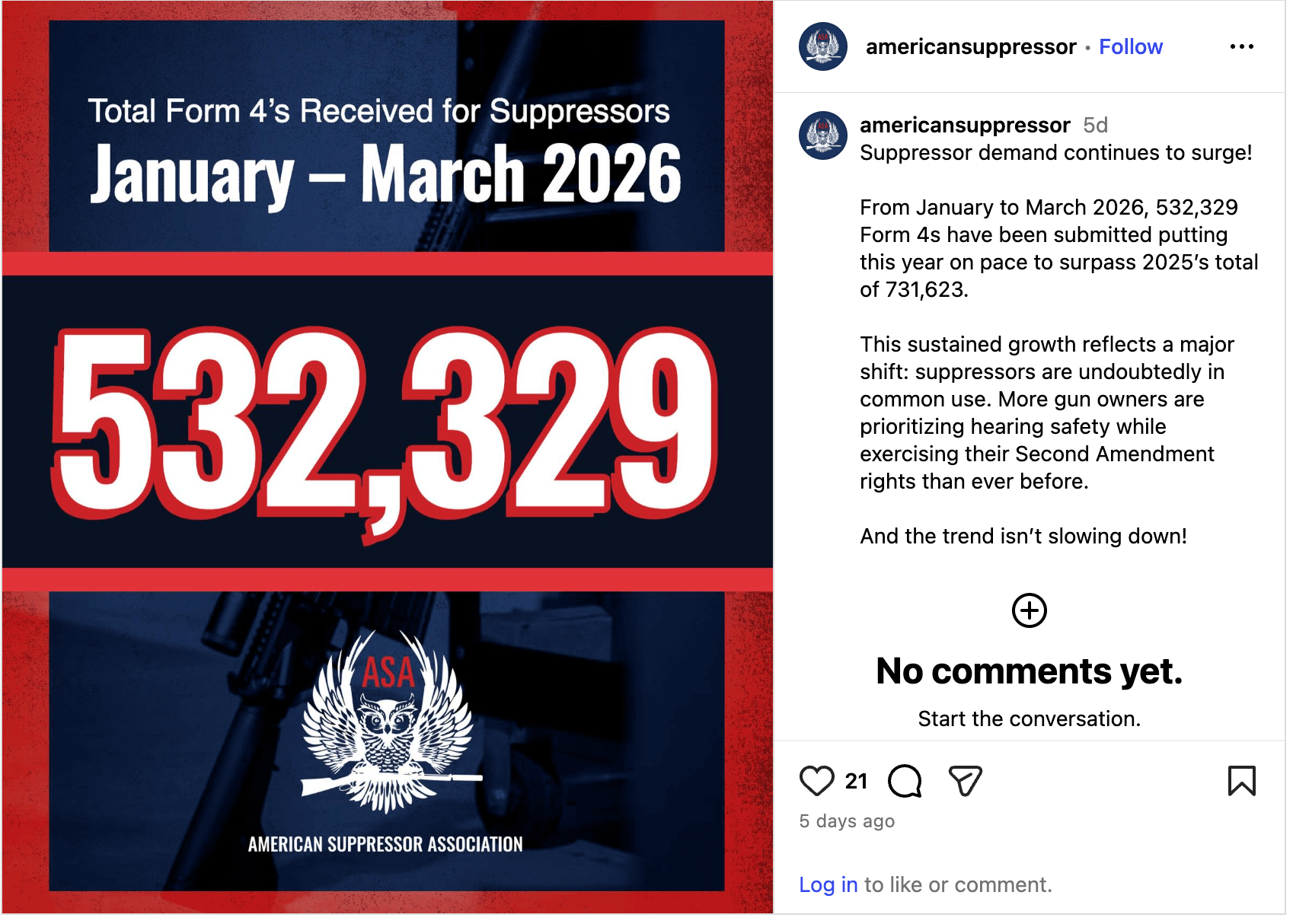
    Hold onto your ear pro, folks—2026 is off to a blistering start for suppressor sales! The ATF just dropped a bombshell report: over 1 million NFA forms processed in the first four months alone. That’s right, more than a million shooters, hunters, and range warriors are ditching the outdated regulations and securing their hearing-safe suppressors faster than you can say “Hearing Protection Act.”

    The Numbers Are Jaw-Dropping

    Let’s break it down. In 2025, the entire year saw around 850,000 NFA items registered, with suppressors leading the pack at over 600,000. Fast-forward to 2026: Q1 (January through April) already clocks in at 1,048,372 forms, predominantly for cans. At this pace, we’re staring down the barrel of over 3 million by year’s end—shattering every record in the books.

    Suppressors aren’t just popular; they’re exploding in demand. Pistol cans, rifle threads, and modular monsters are flying off shelves from SilencerCo to Dead Air. Why? American gun owners are proactive, not reactive. With whispers of real reform heating up in Congress, everyone’s getting ahead of the curve.

    Fueling the Fire: Reforms on the Horizon

    The surge ties directly to momentum for suppressor deregulation. The SHUSH Act and renewed pushes for the Hearing Protection Act promise to strip away the $200 tax stamp, the endless wait times, and NFA red tape. No more treating these life-saving devices like machine guns—suppressors reduce noise by 20-35 decibels, protecting your hearing without sacrificing performance.

    “This isn’t about Hollywood ‘silencers.’ It’s about safer shooting for everyone—from PLR dads to precision PRS competitors,” says NSSF’s Josh Schoenknecht. “Americans are voting with their Form 4s.”

    States like Texas, Florida, and Arizona have already eased restrictions, proving suppressors belong in every safe. With pro-2A majorities eyeing tax relief, 2026 could be the year cans go fully OTC.

    Hearing Safety Meets Second Amendment Freedom

    Let’s be clear: suppressors save eardrums. The CDC reports 37 million Americans suffer hearing loss, much from recreational shooting. A quality can drops a .223 to safe levels—safer than a jackhammer. Yet the 1934 NFA clings to life, forcing months-long waits and bureaucratic BS.

    • Record Processing: ATF’s eForms slashed wait times to under 90 days for most—fueling the boom.
    • Industry Response: Manufacturers ramping production; new models like the SilencerCo Hybrid 46M are backordered nationwide.
    • Your Move: Demand is high, but supply is catching up. Don’t wait—file that Form 4 today.

    What’s Next for 2A Patriots?

    This isn’t a flash in the pan; it’s a revolution. Gun owners are sending a message: we want our rights now. Contact your reps, support SAFE Act foes, and gear up. Suppressors aren’t luxuries—they’re essentials for safe, responsible firearm ownership.

    2026 is the year the suppressor goes mainstream. Are you in? Drop a comment below: What’s your dream can setup? Stay armed, stay free.

    Follow GunStuff.tv for the latest 2A wins. Semper Fi.

    Join the Fight - Second Amendment Foundation

    References

  • NRA, SAF, FPC Urge Supreme Court to Hear Challenge to NFA Suppressor Bans and Taxes

    NRA, SAF, FPC Urge Supreme Court to Hear Challenge to NFA Suppressor Bans and Taxes

    Big news for gun owners and Second Amendment advocates: the National Rifle Association (NRA), Second Amendment Foundation (SAF), and Firearms Policy Coalition (FPC) have thrown their weight behind a critical Supreme Court challenge to the National Firearms Act’s (NFA) burdensome suppressor regulations. On April 2, 2026, these powerhouse organizations filed amicus briefs supporting the certiorari petition in Peterson v. United States, urging the justices to take up the case and strike down the NFA’s registration mandates and $200 transfer tax on suppressors.

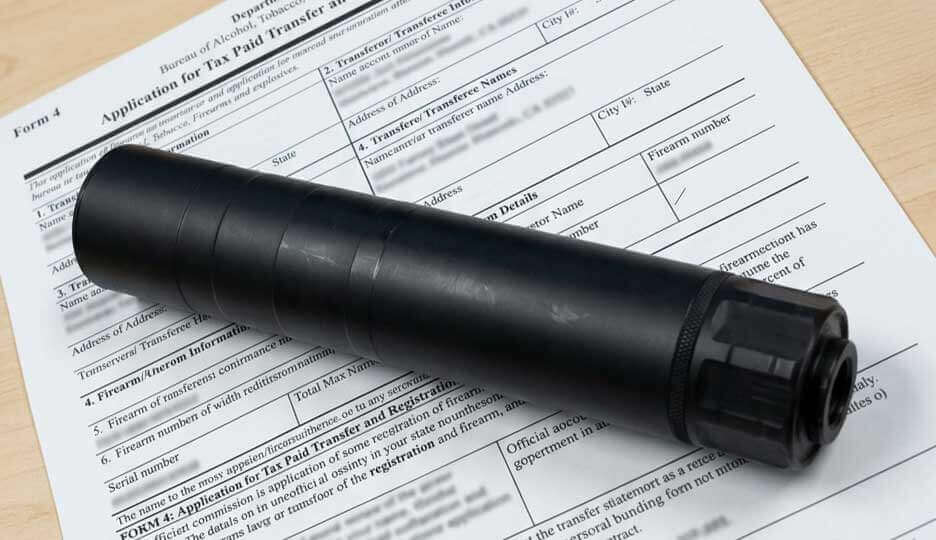
    form 4

    Why Suppressors Matter – More Than Just Hollywood Myth

    Let’s set the record straight: suppressors (or “silencers,” if you prefer the dramatic term) aren’t tools for assassins. They’re hearing protection devices that reduce gunshot noise by 20-35 decibels, making range days safer and more enjoyable. Millions of them are in circulation today, used by hunters, sport shooters, and even some law enforcement. Under the New York State Rifle & Pistol Association v. Bruen standard, these are “arms” in “common use” for lawful purposes – exactly the kind of gear the Second Amendment protects.

    The Case at the Heart of the Fight: Peterson v. United States

    At issue is the NFA’s 1934 framework, which slaps suppressors with federal registration, fingerprints, photos, CLEO sign-off (in many cases), and that infamous $200 tax stamp per transfer. Plaintiffs in Peterson argue these hurdles are unconstitutional post-Bruen. The Fifth Circuit agreed in part but punted on the tax issue, creating a circuit split ripe for SCOTUS review.

    The amicus briefs hammer home the point:

    • NRA: Emphasizes suppressors’ historical roots and modern utility as bearable arms, with no tradition of taxation or registration at the Founding.
    • SAF: Highlights empirical data on their commonality – over 3 million registered – and how NFA burdens chill exercise of rights.
    • FPC: Tears into the tax as a discriminatory fee lacking historical analogue, echoing Murphy v. NCAA‘s rejection of pay-to-play schemes for constitutional rights.

    The Inflationary Outrage of the $200 Tax

    Originally designed as a prohibitive barrier (equivalent to about $4,500 today), the $200 tax is now a relic. With suppressors costing $500+, it’s still an extra hit – and that’s before ATF wait times averaging 6-12 months. Pro-2A warriors argue this isn’t regulation; it’s suppression of a protected right. Bruen demands history and tradition, not 1930s New Deal economics.

    What Victory Would Mean for You

    If SCOTUS grants cert and rules in favor, expect a seismic shift. No more NFA paperwork for cans means easier access to safer shooting. It could ripple to other NFA items like SBRs and AOWs, dismantling the registry brick by brick. This isn’t just about quiet rifles; it’s about reclaiming the Second Amendment from bureaucratic overreach.

    Stay vigilant, patriots. Support NRA, SAF, FPC, and GOA with your membership and donations. Follow Peterson docket updates – the future of our rights hangs in the balance. The Court has a chance to affirm that “shall not be infringed” means exactly that.

    Keep your powder dry and your voice loud. The fight for freedom continues.

    Join The Fight

    References