Tag: North Carolina

  • North Carolina Repeals Long-Standing Handgun Permit-to-Purchase Requirement

    North Carolina Repeals Long-Standing Handgun Permit-to-Purchase Requirement

    In a landmark decision that champions individual liberty, North Carolina has finally scrapped its outdated handgun permit-to-purchase requirement, ending a century-old barrier that stood between law-abiding citizens and their Second Amendment rights. This move isn’t just a policy tweak—it’s a powerful affirmation that responsible adults shouldn’t need government permission slips to exercise a fundamental freedom.

    A Relic of the Past Meets Modern Realities

    For generations, North Carolinians faced an extra layer of bureaucracy just to buy a handgun. The old system demanded a sheriff-issued permit, complete with fingerprints, fees, and waiting periods that often stretched beyond what’s reasonable. While supporters claimed it kept guns out of the wrong hands, the reality showed it disproportionately burdened everyday citizens—hunters, homeowners, and those simply seeking self-defense—without delivering measurable safety gains. Background checks through the federal NICS system already handle that screening effectively nationwide.
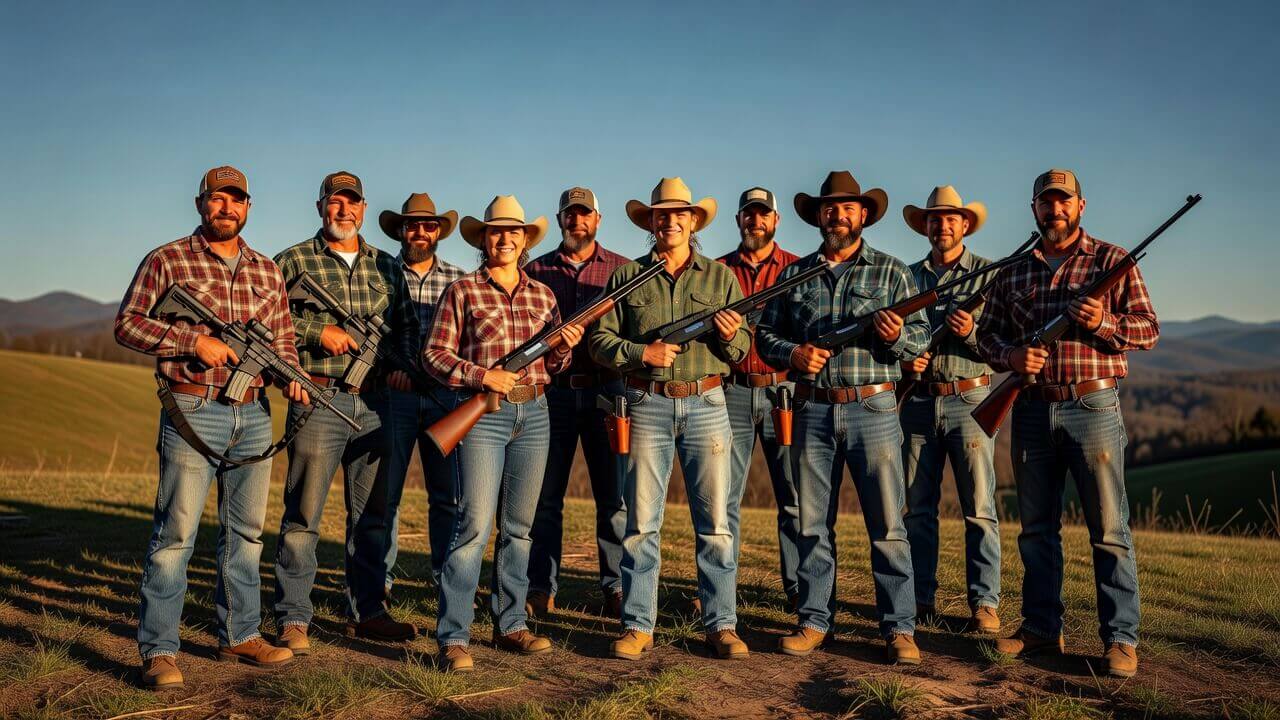
    North Carolina residents proudly displaying firearms in a rural setting under clear skies

    Why This Repeal Matters for Gun Owners

    By eliminating the permit mandate, the state has streamlined the process and reinforced the principle that the right to keep and bear arms belongs to the people, not subject to arbitrary local gatekeepers. Pro-2A advocates across the country are hailing this as a common-sense victory that aligns with constitutional carry trends sweeping other states. Law-abiding buyers can now focus on selecting the right firearm for protection or sport rather than navigating red tape.

    Critics of the change often cite concerns over rising gun violence, yet data from states with fewer purchase restrictions consistently shows that armed, trained citizens deter crime more effectively than bureaucratic hurdles. North Carolina’s mixed legislative history on firearms—balancing some restrictions with growing recognition of rights—makes this repeal a standout step toward consistency with the Founders’ vision.

    Looking Ahead: A Stronger Stand for Freedom

    This reform opens doors for new gun owners while empowering existing ones. It sends a clear message to other states still clinging to permit-to-purchase schemes: the era of treating the Second Amendment like a privilege is fading. Expect increased participation in training courses, range time, and responsible ownership as barriers fall.
    Symbolic image of the American flag alongside a modern handgun representing constitutional rights

    North Carolina’s decision proves that restoring access to firearms ownership strengthens communities by fostering self-reliance and deterrence. As the debate continues, one truth remains: protecting the right to bear arms isn’t about politics—it’s about preserving the liberty that defines America.

    Join the Fight - Second Amendment Foundation

    References

  • North Carolina Private School Security Act Becomes Law, Allowing Concealed Carry by Authorized Personnel on Private School Campuses

    North Carolina Private School Security Act Becomes Law, Allowing Concealed Carry by Authorized Personnel on Private School Campuses

    In a massive win for Second Amendment rights and school safety, North Carolina’s Private School Security Act (S280) has officially become law after lawmakers heroically overrode Governor Josh Stein’s veto. Effective December 1, 2025, this groundbreaking legislation empowers private schools to authorize qualified personnel to carry concealed handguns and stun guns on campus. Finally, private educational institutions can take real control of their security without relying on outdated “gun-free zone” fantasies that leave kids vulnerable.

    North Carolina State Capitol with overlay text announcing Private School Security Act becoming law after veto override

    The Details: Who, What, and How

    Here’s the meat of S280: Private schools can now opt-in to allow staffers with valid concealed handgun permits (CHP) to carry on campus. But it’s not a free-for-all—lawmakers built in smart safeguards:

    • Authorization Required: School boards or governing bodies must explicitly approve the program.
    • Training Mandates: Authorized personnel need 16 hours of school-specific training, covering active shooter response, de-escalation, and more. They also undergo annual requalification.
    • Background Checks: Only those with clean records and active CHPs qualify—no exceptions.
    • Stun Guns Too: Less-lethal options are included for added flexibility.

    This isn’t about turning schools into fortresses; it’s about layering in professional, responsible armed defenders who can stop threats in their tracks. Think of it as the school equivalent of a concealed carrier at the mall—discreet, trained, and ready.

    The Veto Override: A Triumph Over Anti-Gun Resistance

    Governor Stein tried to play the fear card, vetoing the bill with the usual “guns in schools are dangerous” rhetoric. But pro-2A legislators weren’t having it. The House voted 72-44 to override, followed by a decisive Senate tally. This override isn’t just a policy win—it’s a clear message to gun-grabbers: North Carolinians value self-defense over virtue-signaling.

    Private schools, as private property, have always had the right to set their own rules. S280 simply removes government-imposed barriers, letting parents, administrators, and communities decide what’s best for their kids.

    Why This Matters for School Safety and 2A Rights

    We’ve seen the stats: Armed responders stop active shooters 94% of the time when they engage quickly (FBI data). “Gun-free zones” are magnets for monsters—over 98% of mass public shootings since 1950 occurred in such areas. Private schools in NC now have the tools to harden their defenses without waiting for underfunded, overstretched police.

    This law expands on existing public school provisions, bringing parity to private institutions where faith-based and independent schools serve hundreds of thousands of students. It’s a step toward nationwide sanity, proving that common-sense self-defense works.

    What’s Next? Eyes on Implementation and Beyond

    Starting December 1, 2025, expect private schools across the Tar Heel State to roll out these programs. Forward-thinking administrators will prioritize vetting top-tier candidates—veterans, retired LEOs, or everyday heroes with CHPs.

    If you’re a NC private school leader, parent, or 2A supporter, celebrate this victory and stay vigilant. Contact your reps to push for similar expansions to public charters and homeschool co-ops. The momentum is building—gun rights are winning where it counts: protecting our kids.

    Stay strapped, stay safe, and keep fighting for the Second Amendment.


    Join the Fight - Second Amendment Foundation

    References

  • N.C. Wildlife Resources Commission Announces Updated 2026-2027 CWD Surveillance Areas Adding Four Counties Including Primary Area in Edgecombe

    N.C. Wildlife Resources Commission Announces Updated 2026-2027 CWD Surveillance Areas Adding Four Counties Including Primary Area in Edgecombe

    Hunters, mark your calendars and update your maps—the North Carolina Wildlife Resources Commission (NCWRC) just dropped big news on Chronic Wasting Disease (CWD) surveillance for the 2026-27 deer season. If you’re gearing up for some prime-time whitetail action, this directly impacts where and how you hunt in the Tar Heel State.

    Hunter in camouflage submitting a deer head sample for CWD testing at a check station.Edgecombe County is now a primary CWD surveillance area after four positive detections during the 2025-26 season. That’s a wake-up call, folks. Joining it as new secondary surveillance areas are Martin, Pitt, and Halifax counties. On the bright side, eleven counties got the green light to drop from secondary status—no CWD found despite some serious sampling efforts there.

    Here’s the deal: No mandatory testing is required anywhere, which keeps things straightforward for us Second Amendment defenders hitting the woods with our rifles and shotguns. But voluntary sampling is strongly encouraged, especially if you’re planning to fill your freezer with venison. Last season alone, hunters and cooperators submitted over 23,000 samples—that’s the power of responsible sportsmen stepping up to protect our herds and our hunting heritage.

    To curb the spread of this fatal deer disease, restrictions are in place in these areas:

    • No baiting or feeding deer.
    • Restrictions on fawn rehabilitation.
    • Rules on carcass transport and disposal of deer parts—check the details to stay compliant.

    Why does this matter to us 2A patriots? Hunting isn’t just a sport—it’s a tradition rooted in our constitutional rights. Our firearms give us the tools to manage wildlife effectively, and programs like this CWD surveillance rely on you, the hunter, to be the frontline defense. By participating voluntarily, we’re proving that armed citizens are the best stewards of our natural resources. No government overreach here—just smart, self-reliant action.

    Before you dress out that buck, think CWD: Test it if you’re in or near these zones, cook your venison thoroughly, and dispose of waste properly. Head to the NCWRC website for the full list of rules, maps, and drop-off locations. Stay legal, stay safe, and keep exercising those God-given rights in the field.

    Who’s ready to hunt North Carolina? Drop your thoughts in the comments—have you dealt with CWD regs before?

    Stay armed, stay informed, and happy hunting!

    Join the Fight - Second Amendment Foundation

    References